When your phone isn’t enough — and the honest tells
A modern phone handles most listings. Here’s how to recognise the price band, architecture or light that calls for a professional.
A modern phone with good light, a tripod, and a careful agent will out-shoot a hurried DSLR shoot most of the time. But not every time. There are listings where the phone has hit its ceiling, and the honest move is to bring someone else in.
Most agents know this in their gut. The list below is just the gut feeling, written out, so you can decide before you spend an hour shooting something that needs a re-shoot anyway.
Bring in a professional when any of these are true
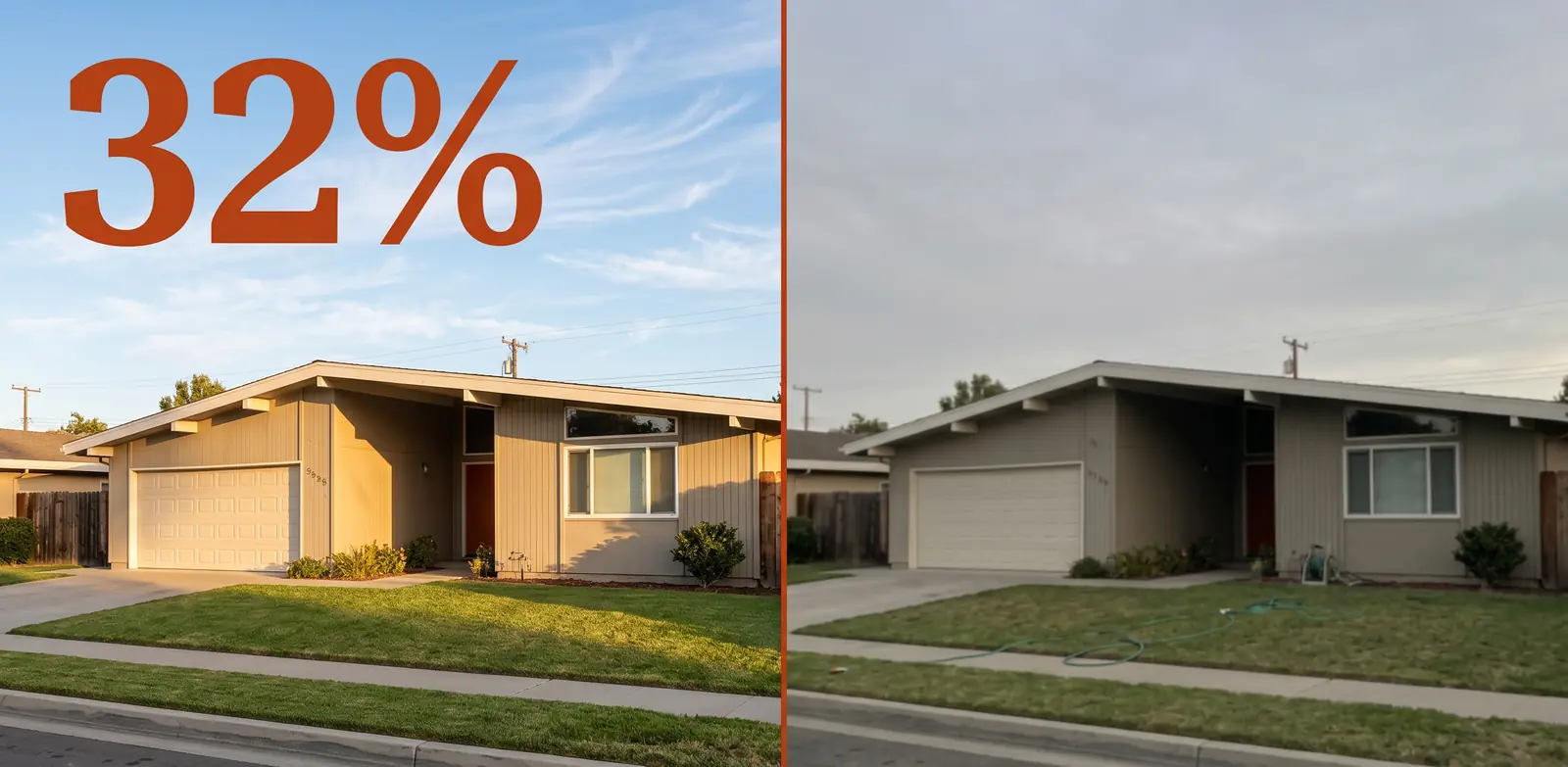
1. The listing is more than 25% above your market’s median price. The buyer at that price band is comparing your listing against listings that almost universally use professional photography. Industry analyses from VHT Studios and HomeJab consistently find that listings with professional photos sell closer to list price and measurably faster in mid- and upper-tier price bands. The presentation gap is harder to close with a phone the higher up the price ladder you go.
2. The home has a feature that requires a wide professional lens. Examples: a great room with a 22-foot vaulted ceiling, a primary suite that opens onto a covered patio, a kitchen-living-dining open plan over 600 square feet, a long view down a corridor of mature trees. Phones have wide lenses, but the wider you push them, the more distortion you get at the edges. A professional with a tilt-shift or a wide-angle rectilinear lens can show the room as it actually feels. The phone will compress it.
3. The property has a major architectural detail the buyer will buy on. A clerestory window line, a bookmatched stone fireplace, a custom millwork bar, a wine cellar, a primary bath wet room with a freestanding tub against a feature wall. These reward the focus, depth, and dynamic range a larger sensor and tripod-and-bracket workflow give you. Shot on a phone, the detail reads as “nice” instead of “spectacular,” which is the wrong outcome on a listing where the architecture is the value.
4. The home has serious mixed lighting and you cannot avoid it. Most rooms balance fine with the iPhone exposure-lock workflow. Some do not. The hard cases are: a great room with eight downlights, two pendants, three windows facing different directions, and a fireplace going. These rooms need flash-fill or HDR bracketing with manual blending to look right — both standard professional techniques, neither possible on a phone at acceptable quality.
5. The seller is paying close attention to the listing presentation. This is the underrated tell. If the seller has asked about photography twice, sent you Zillow links to listings they like, or mentioned a stager — they have an opinion about how this listing should look. Even if a phone shoot would work, the relationship is better served by a professional shoot. The cost is small. The trust is large.
Honest tells your phone has hit its ceiling
If you have already shot the listing on your phone and you are debating whether it is good enough, the following are the consistent tells. Any one is a yellow flag. Two or more is a re-shoot.
Soft edges in the corners of every wide shot. This is the phone’s wide lens distorting at the edges. It cannot be fixed in post without cropping in, which loses the wide composition you took the shot for.
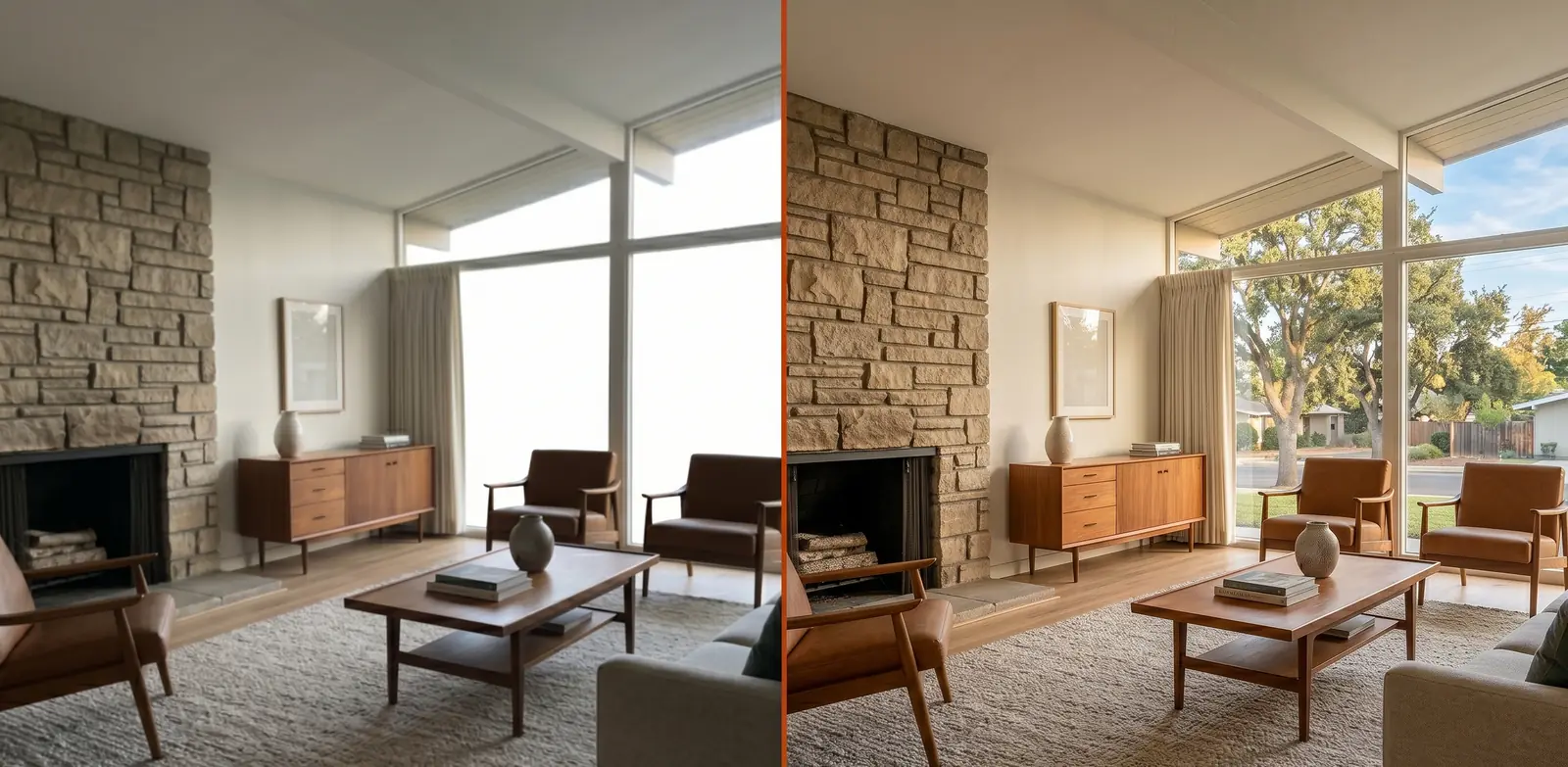
The window is a flat grey or flat white rectangle. Either you under-exposed the interior to save the window, or you over-exposed the window to save the interior. A professional shoot with bracketed exposure or flash-fill renders both. Your phone, even with exposure lock, struggles with windows wider than five feet on a bright day.
The room reads “smaller than it feels in person.” This is the most common phone failure on listings. It happens because the camera is at the wrong height, the lens is too wide, or the composition was taken from a doorway instead of a corner. Some of these are technique fixes (Corners beat doorways). Some are sensor and lens fixes — and those require a different camera.
You have shot the same room more than five times and it still does not feel right. The room is telling you something. If the technique is sound and the light is sound, the limitation is the camera.
What “bringing someone else in” looks like
It does not have to be a $1,500 photo package. The market has thickened in the middle:
- A junior real-estate photographer in most metros will shoot a listing for $150 to $300, deliver 20 to 30 retouched images, and turn around in 24 to 48 hours.
- A drone-and-still combo is $300 to $500 in most markets and is the right call for properties with notable land, lake frontage, or roofline.
- A media package with stills, drone, twilight, and a walkthrough video is $600 to $1,200 — appropriate for upper-tier listings or properties marketed nationally.
The phone-vs-professional decision is not zero-sum. The honest version is: phone for 80% of your listings, and a clear-eyed call on the other 20% where the value of the home, the architecture, or the price tier deserves a pro.
The short version
A phone is enough for most of what most agents list. It stops being enough when the price band, the architecture, the light, or the seller’s expectations have all crossed a line. The tells are real: soft corners, flat windows, rooms that read smaller than they are, and re-shoots that never quite land. When you see two of them in the same listing, the cheaper move is to call a photographer.
Know when to call. The phone covers the rest.
Phone photos to market-ready listing images in 10 seconds. Twenty free when you sign up — no credit card.
One photo tip every Sunday.
Real techniques agents are using this week. No spam. Unsubscribe in one click.