Listing photography in low light — when to shoot and when to wait
A 60-second read of the room — the floor, the windows — tells you whether to shoot now or come back tomorrow.
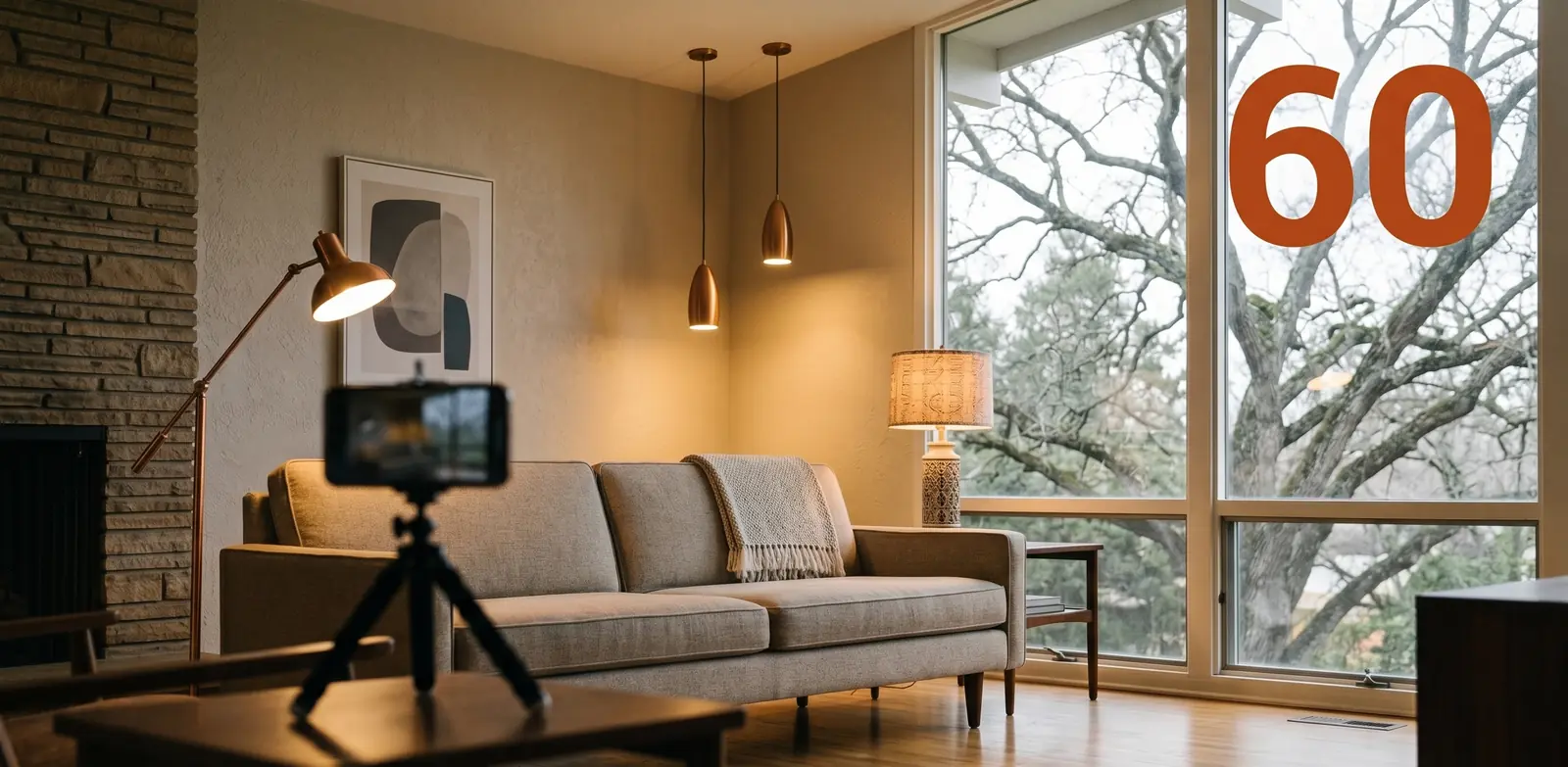
The hardest shoot is not a bright sunny day. It is a property with the wrong amount of light. Too dark and the photos look gloomy. Too bright in the wrong places and the windows blow out into white rectangles. Mixed light from windows and warm bulbs and the camera can’t decide which one to trust.
This is a practical guide to deciding, in the first 60 seconds after you walk into a room, whether to shoot now or to come back. The cost of waiting is one drive. The cost of shooting in the wrong light is a re-shoot — and re-shoots are the expense that quietly eats your listing schedule.
The two questions to ask in the doorway
When you walk into a room, ask:
1. Is the indoor light strong enough on its own?
Turn on every light in the room. Then look at the floor. If the floor reads bright and even, the room has enough light to shoot. If the floor has dark patches more than two feet across, the room is under-lit even with everything on. That is a signal to either wait for daylight, change bulbs (three accessories worth carrying), or shoot a different time of day.
2. Is the window light fighting the indoor light?
Look at the window. If it is significantly brighter than the wall next to it — bright enough that you cannot see detail in the window — your camera will struggle. The brighter the gap, the harder the shot.
These two questions tell you almost everything about whether to shoot.
Three low-light situations and the right move for each
Situation A: heavy overcast, mid-day, all interior lights on
This is the most common “low light” situation, and it is the easiest one. An overcast sky is essentially a giant softbox. The light is diffuse, even, and forgiving. The interior will photograph cleanly with all lights on, no harsh window blow-outs, and natural-looking shadows.
Shoot now. Set the phone on a tripod, turn off Live Photo and Smart HDR, exposure-lock with a tap-and-hold on a neutral wall, and shoot. The result will be balanced and clean. Many professional real-estate photographers prefer overcast for exactly this reason.
The only thing to watch is white balance. Overcast light is cool. Warm interior bulbs are warm. You may need to correct the colour mix in editing. If you can, swap mismatched warm bulbs in the most important rooms before the shoot.
Situation B: early morning or late afternoon, sun on one side of the house only
This is the trickier case. The east-facing rooms get strong morning light. The west-facing rooms are dim. The rest of the house is somewhere in between.
Shoot the bright rooms first, in the light they were designed for. Then shoot the dim rooms later in the day when the sun has moved, or shoot them lit entirely by interior lights with the blinds adjusted to soften any remaining glare.
Two specific moves help:
- Sheer the bright windows. A sheer curtain or a thin white scrim over a bright window cuts the gap between window and wall by about a stop. This brings the room into camera range without losing the view entirely.
- Block direct sun streaks on hard surfaces. A direct sun streak across a glossy kitchen counter or a hardwood floor will read as a blown-out white blob in the photo. Close blinds enough to break up the streak, or wait fifteen minutes for the sun to move.
Situation C: dusk, twilight, evening
The hardest situation. The exterior is darker than the interior. Bulbs read very warm against a cool blue sky. The dynamic range exceeds the phone’s sensor.
Two choices: shoot it as a twilight feature, or do not shoot it at all. A twilight exterior, shot well, is a hero photo — see Twilight real estate photography on your phone. But it has to be intentional. Trying to shoot an “evening but not too dark” interior is the worst of both worlds.
If the listing needs an interior shot and the natural light has gone, the right move is to come back. Driving back the next morning is two hours. A re-shoot triggered by the MLS rejecting dim photos is half a day.
What the phone is actually doing in low light
Understanding the failure mode helps you avoid it. Three things go wrong as light drops:
1. Shutter speed slows down. To collect enough light, the camera leaves the shutter open longer. Any hand-held shake during that exposure shows up as soft, slightly smeared edges. Tripod or no shot.
2. ISO rises. The camera amplifies the signal from the sensor, which amplifies the noise alongside it. Photos start to look grainy. The phone tries to smooth this out with software, which trades grain for a slightly plastic, soft look.
3. White balance becomes unreliable. In mixed-light, low-light scenes, the camera has to guess which light source is the “true” colour reference. It often guesses wrong, leaving you with a warm room, a cool room, or a kitchen with one wall yellow and the other wall blue.
All three failure modes are tripod-and-exposure-lock fixes. The tripod removes the shake at slow shutter speeds. Exposure lock prevents the camera from drifting between shots. Replacing burned-out bulbs and matching colour temperature inside the room removes the white-balance ambiguity.
The 60-second decision
When you walk into a room, give yourself one minute to decide:
- If the floor is evenly bright with all lights on, shoot.
- If the floor has dark patches with all lights on, change a bulb or wait.
- If the window is dramatically brighter than the wall, sheer the window or come back later.
- If the sun is streaking on hard surfaces, close the blind partially or wait fifteen minutes.
- If natural light has gone entirely, come back in the morning.
This is not a rule book. It is a checklist. The agents who do this every shoot have one consistent advantage over the agents who do not: their listing photos are predictable. Predictable photos build a buyer’s trust in the listing before the showing, which is what the photography is for.
The short version
Low light is not the enemy. The enemy is the wrong light for the camera you have. Overcast is the phone’s friend. Strong directional sun on one side of the house is manageable with timing and sheers. True dusk and evening is either twilight on purpose or come-back-tomorrow. Sixty seconds of looking at the floor and the windows will tell you which case you are in.
Sources
- NAR — 2024 Profile of Home Buyers and Sellers Highlights (for the broader stat that 41% of buyers find listing photos very useful — relevant because dim photos are the most common reason a buyer scrolls past)
- ListedRight — Lighting fundamentals for real estate photography
Shoot the right light. We clean up the rest.
Phone photos to market-ready listing images in 10 seconds. Twenty free when you sign up — no credit card.
One photo tip every Sunday.
Real techniques agents are using this week. No spam. Unsubscribe in one click.