ListedRight.aiListedRight.ai

AI Disclosure

One-click AI disclosure for the photos and listings where you need it. A visible label and a publicly accessible link to the unaltered original — designed to support NAR Articles 2 and 12, California AB 723, your MLS rules, and your brokerage policy. Under your judgement, not ours.

Version 3.0Effective 20 May 2026Last updated 20 May 2026Issued by ListedRight, IncSupersedes v2.0 (20 May 2026) · v1.0 (15 May 2026)

How the disclosure works

ListedRight gives you two settings that, taken together, produce a clear disclosure for any AI-enhanced or virtually-staged photo: a disclosure label rendered in a corner of the image, and an original-image link to the unaltered photograph.

You toggle either setting per-photo, per-listing, or as your account default. We don’t apply them automatically — the right disclosure posture depends on your state, your MLS, your brokerage, and the type of edit. The default label wording is configurable; for California listings the recommended wording is “Digitally altered — original image available.” For Dress a Room outputs, a separate “Virtually Staged” label is available since most MLSes require that label specifically.

  • Disclosure labelSmall, legible mark in a corner of the image. Wording, placement, and styling configurable per jurisdiction and MLS.
  • Original-image linkPublicly accessible URL to the unaltered original. Active for the period documented in the AI Use Policy.
  • EXIF metadataDisclosure flag and original URL travel with the file when the settings are enabled.
  • Per-listing toggleSettings apply per-photo, per-listing, or as your account default. You make the call.
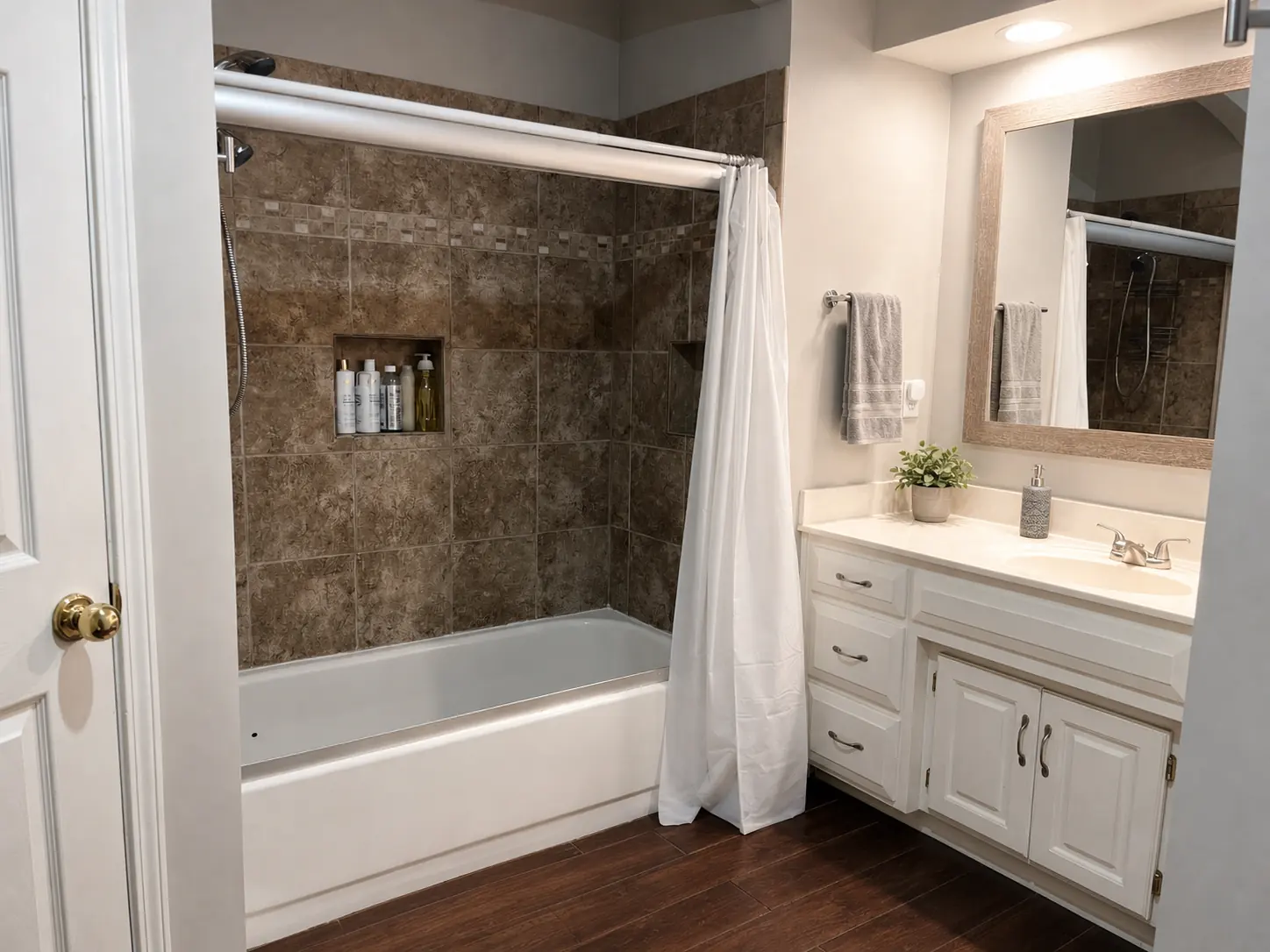
Listing photo — primary bathroom — with the ListedRight digitally-altered disclosure tag
123 Maple Ave · Primary Bath · Photo 09 / 184032 × 3024
Digitally altered
View original

Aligned with the NAR Code of Ethics

Articles 2 & 12
Article 2

Misrepresentation

REALTORS® shall avoid exaggeration, misrepresentation, or concealment of pertinent facts relating to the property or the transaction.

ListedRight’s enhancement features are scoped to presentation (lighting, sky, twilight, clutter removal) and staging (virtual furniture in empty rooms), not to altering what physically exists. When the disclosure label and original-image link are enabled, the buyer has immediate access to the unaltered photograph — reducing the concealment risk Article 2 addresses.

Article 12

True picture in advertising

REALTORS® shall be honest and truthful in their real estate communications and shall present a true picture in their advertising, marketing, and other representations.

With the disclosure label and original-image link both enabled, the marketing communication is supported by clear identification of the enhancement and accessible source content. Together this is designed to address the "true picture" requirement — though whether a specific image meets the standard always remains with the Realtor and their broker.

  • SOP 12-10Directly relevant for AI-edited and digitally altered listing images.
  • SOP 12-8Applies to website content — images and property information must remain current and accurate.

State-specific compliance

AI-disclosure law for real-estate marketing is evolving. Below is where things stand, by state, as of 20 May 2026. Six states have specific positions — only California has an AI-specific image statute in effect today. The remaining states are covered by general misleading-advertising license law plus the federal baseline.

CA

California

Assembly Bill 723 · Bus. & Prof. Code § 10140.8 · Live · effective 1 January 2026
Live · in effect

The only AI-specific real-estate-image disclosure statute currently in effect in the US. Applies to brokers, salespersons, and persons acting on their behalf. Willful violations may be prosecuted as a misdemeanor under California real estate licensing law.

What the law requires
A reasonably conspicuous statement that the image has been digitally altered, placed on or adjacent to it · Access to the unaltered original — alongside the altered version, or via a link, URL, or QR code
No disclosure
White balance · exposure · contrast · brightness · cropping · straightening · sharpness — provided they do not change the representation of the property
Tag applied
Fixtures · furniture · appliances · flooring · walls · paint colour · hardscape · landscape · façade · floor plans · outside views · streetlights · neighbouring elements
ListedRight coverage
For California listings, configure the label to read "Digitally altered — original image available" (or similar wording that clearly communicates alteration) rather than the brand-generic "AI-enhanced." The configurable label plus the original-image URL together give you the conspicuous statement and access mechanism AB 723 requires; how you present them inside your specific MLS is the part you should confirm with your broker.
WI

Wisconsin

§ 452.136(1m), per 2025 Wisconsin Act 69 · Not yet effective · live 1 January 2027
Pending · effective 2027

Triggers disclosure when technology-assisted alteration adds, removes, or changes elements of the property in a way that creates a false or misleading impression. Narrower than California — turns on the impression created, not on the fact of alteration itself.

What the law requires
Disclosure when AI-assisted alteration adds, removes, or changes property elements creating a false or misleading impression · No disclosure trigger when the alteration does not create that impression
No disclosure
Edits that do not create a misleading impression of the property
Tag applied
Adding, removing, or changing property elements in a way that misleads
ListedRight coverage
The same label-and-link combination configured for California will support § 452.136(1m) when it goes live. Wisconsin agents should plan to enable these settings for affected listings before the 2027 effective date.
CO

Colorado

Senate Bill 189 — different compliance area · Effective 1 January 2027 · automated decisioning, not photos
Different compliance area

SB 189 is not a listing-image disclosure statute and should not be described as a parallel to California AB 723. It governs automated decision-making technology used in consequential decisions, including some housing-related ones (eligibility, access, screening, automated pricing).

What the law requires
Rules for ADM systems used in consequential housing decisions · Does not address AI-edited listing photos
No disclosure
Not applicable to photo disclosure
Tag applied
Tenant screening · lead scoring · automated routing · pricing · eligibility decisions
ListedRight coverage
ListedRight’s photo disclosure tooling does not address SB 189; SB 189 governs a different category of AI use. If your workflow includes tenant screening, lead scoring, or other AI decisioning tools alongside ListedRight, review SB 189 separately with counsel.
NY

New York

No enacted listing-image statute · S9584 pending in committee · High-watch · DOS trend-alert issued
High-watch · no statute yet

No enacted listing-image-specific AI disclosure statute as of mid-2026, but the NY Department of State has issued a public trend-alert warning homebuyers about AI-generated home listings. Senate Bill S9584 — regulating materially misleading digital representations in listings — is currently in committee.

What the law requires
No specific NY statute yet enacted · DOS warning + pending S9584 signal regulatory attention
No disclosure
No statute yet — general misleading-advertising rules apply
Tag applied
Pending bill targets images · videos · virtual tours · virtual staging · altered layouts · AI-generated elements
ListedRight coverage
Enabling clear disclosure and access to the original for New York listings is consistent with what the DOS warning calls for. S9584 may be amended before any enactment — we update this page when it moves.
TX

Texas

Texas Occupations Code Chapter 1101 · General license law · no AI-specific statute
General license law

TREC has not enacted an AI-specific photo disclosure statute, but Chapter 1101 prohibits licensees from making false, deceptive, or misleading representations. AI has been added as a 2026–2027 Legal Update curriculum topic.

What the law requires
No false, deceptive, or misleading representations in advertising · AI alterations fall under the existing misleading-advertising standard
No disclosure
Tag applied
ListedRight coverage
When the label and link settings are enabled, the disclosure may reduce the risk that a viewer is misled by an AI-enhanced output. Texas-licensed agents should still avoid edits that materially misrepresent the property and confirm their obligations under TREC rules, brokerage policy, and MLS standards.
FL

Florida

Florida Statute § 475.25 · General license law · no AI-specific statute
General license law

No AI-specific photo disclosure statute. FREC may discipline a licensee for advertising in a fraudulent, false, deceptive, or misleading manner under § 475.25.

What the law requires
No fraudulent, false, deceptive, or misleading advertising · AI alterations fall under FREC’s general discipline authority
No disclosure
Tag applied
ListedRight coverage
Using the label and original-image link may reduce the risk that AI-enhanced outputs are viewed as deceptive. Florida agents should still avoid materially misleading edits and confirm MLS, brokerage, and FREC requirements.
General license law

Every US state without an AI-specific statute still has the same set of rules in play: FTC Section 5 (federal deceptive-advertising baseline, no AI exemption), the Federal Fair Housing Act (24 C.F.R. § 100.75 — discriminatory housing advertisements, no AI carveout), state real estate license law, state UDAP statutes, and the NAR Code of Ethics. ListedRight’s label and original-image link settings are designed to help address the substantive disclosure concern these rules share. Whether and when to enable them for a given listing is your call — driven by your state, your MLS, your brokerage policy, and the type of edit.

ALAKAZARCTDEDCGAHIIDILINIAKSKYLAMEMDMAMIMNMSMOMTNENVNHNJNMNCNDOHOKORPARISCSDTNUTVTVAWAWVWY
MLS rules go further than state law — and they vary

Multiple Listing Service rules vary widely and often go beyond state law. Some common patterns we’ve observed across MLSes that publish public guidance:

Disclosure labels may need to appear in specific locations — on the image itself, in the photo description, in the listing remarks, or as a virtual-tour overlay. The "Virtually Staged" label is widely required in a corner of any virtually-staged photo. Some MLSes (including California Regional MLS) require the unaltered original to appear immediately before or after the altered version in the carousel — a URL alone may not satisfy this. Structural changes and modifications outside the owner’s control are commonly prohibited.

How ListedRight tooling supports MLS standards
  • When the disclosure label setting is enabled, the disclosure is rendered on the image itself — not only in metadata — which addresses the on-image-disclosure requirement where it applies.
  • The "Virtually Staged" label is available for outputs from the Dress a Room (virtual staging) feature.
  • The original-image link, when enabled, provides URL-based access. For MLSes requiring carousel-adjacent placement (such as CRMLS), a URL alone may not be sufficient — you may need to publish the original as a second slot in the carousel.
  • ListedRight does not provide structural-modification features — the model is constrained to enhancement, cleanup, twilight rendering, and virtual staging.
  • The product does not enable adding or modifying views or surrounding features.

When disclosure is typically required

CapabilityNo disclosure typically requiredDisclosure typically required
White balance correction
Exposure adjustment
Contrast & brightness
Sharpness and clarity
Colour correction
Cropping and straightening
Sky replacementEnable label + link
Virtual staging (Dress a Room)Label + link + “Virtually Staged”
Day-to-twilight renderingEnable label + link
Object removal (clutter, mess)Enable label + link
Object additionEnable label + link
Lawn or landscape enhancementEnable label + link
A general guide, not legal advice for your situation. Under California AB 723 specifically, the basic edits are explicitly carved out so long as they do not change the representation of the property. For the disclosure-required items, that’s when you typically enable the label and original-image link settings. Your MLS or brokerage may treat the line differently.

Frequently asked questions

8 items
01Will my MLS accept ListedRight photos?

Many MLSes allow AI-enhanced or virtually staged images when they are properly labeled and accompanied by any required original-image placement or disclosure. Requirements vary by MLS, including label language, placement, font size, carousel order, captions, and whether the original image must appear alongside the altered version. Before publishing, confirm your MLS’s current rules and configure the ListedRight output accordingly. If your MLS rejects a ListedRight output for a placement-specific reason, contact our team and we’ll work through it.

02How is the disclosure label rendered on the image?

When you enable the disclosure label setting, ListedRight renders a small, legible mark in a corner of the image, sized to be readable at typical listing-photo viewing sizes. Label wording, placement, and styling can be customised inside the app for your jurisdiction’s and MLS’s specific requirements — for California listings, the recommended wording communicates "digitally altered" rather than "AI-enhanced."

03Can I turn the disclosure label off?

Yes — the label is a setting you control. There are listings and use cases where disclosure isn’t required (basic exposure or white-balance edits, internal-use renders, marketing surfaces outside of a real-estate-licensee context). You are responsible for applying the disclosure where the rules require it. We provide the tool; you make the call.

04Does California AB 723 affect agents outside California?

AB 723 applies to listings of California real property and to California-licensed agents. Agents licensed in other states are subject to their own state’s rules. That said, the substantive standard (conspicuous disclosure of alteration + access to original) is the safest one to adopt nationwide — and other states’ enacted and pending laws are converging on it.

05What if my state passes a new disclosure law after I subscribe?

We update this document and confirm our tooling continues to address the requirement each time a new state law is enacted. The label-and-link combination is designed to address the substantive requirement in each state-level statute enacted so far — California live today, Wisconsin from January 2027.

06How long do you retain the unaltered original?

Originals and enhanced outputs are stored encrypted in AWS for 30 days from upload on a rolling basis, then permanently deleted. The unmodified original is also saved to your phone at the moment of capture, so you keep a copy independent of our retention window. When you enable the original-image link on a specific photo, the original associated with that link is retained for as long as the link remains active, on the terms set out in the AI Use Policy and the in-product setting description.

07Does the disclosure label affect listing performance or visibility?

We are not aware of evidence showing that clear AI disclosure harms listing performance. In practice, transparent disclosure may help preserve buyer trust, but performance can vary by market, listing, MLS, and presentation.

08Where can I find the unmodified original photo?

Every enhanced photo in your ListedRight account links to its original. The original is viewable in the app at full resolution. When you enable the original-image link, the original is also accessible at a public URL included in the photo’s export metadata and copy-pasteable for inclusion in your MLS remarks or property descriptions, for as long as the link remains active under the AI Use Policy.

Questions about your specific situation?

Brokerage compliance officers and attorneys: contact our compliance team. We respond within two business days.

Two-business-day response time.

Ready to use ListedRight with confidence?

Start Free — 20 photos on usNo credit card required.
  • NAR Code of Ethics · Articles 2 and 12 · SOP 12-8 and 12-10National Association of REALTORS®
  • California Assembly Bill 723Bus. & Prof. Code § 10140.8 · effective 1 January 2026
  • Wisconsin § 452.136(1m), per 2025 Wisconsin Act 69Effective 1 January 2027
  • Colorado Senate Bill 189Automated decisioning · not listing-photo disclosure
  • New York Department of State trend-alertAI-generated home listings warning
  • New York Senate Bill S9584Pending · in committee
  • Texas Occupations Code Chapter 1101TREC misleading-advertising prohibitions
  • Florida Statute § 475.25FREC discipline authority
  • FTC Section 5 of the FTC ActFederal deceptive-advertising baseline · no AI exemption
  • 24 C.F.R. § 100.75Federal Fair Housing Act · discriminatory housing ads
  • California Regional MLS (CRMLS)Digitally altered image guidance