The data behind the 32% faster sale figure
Where the number comes from, what it actually measured, and what the newer data says about photography and days-on-market.
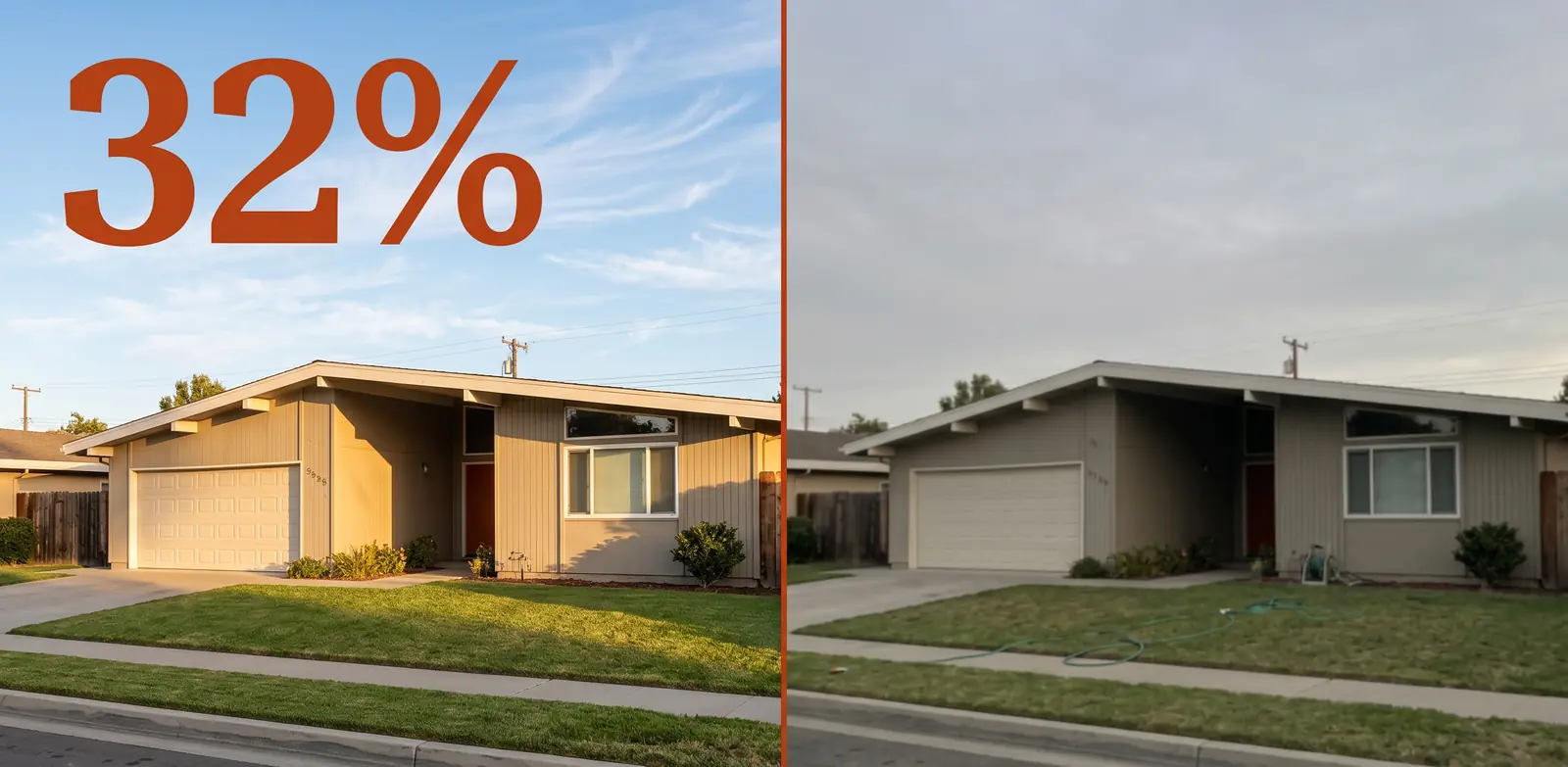
You see the number on every real-estate-photography pitch deck: Homes with professional photos sell 32% faster. It is a tidy claim. It is also a real one — but the data behind it is older, narrower, and more interesting than the bullet point makes it sound.
This article walks you through where the 32% figure comes from, what it actually measured, and what the more recent data says.
Where the number comes from
The original source is a 2013 study by Redfin, titled The Use of Photography in Real Estate Sales. Redfin’s research team looked at roughly 88,000 listings across 19 U.S. markets and compared days-on-market for homes shot with a DSLR camera against homes shot with a point-and-shoot or phone camera.
Across the dataset, homes with high-quality DSLR photos sold up to 32% faster in some price bands than homes shot with lower-quality cameras. The effect was strongest in the $400,000 to $1,000,000 price range, where presentation matters most to the click decision.
The study also reported a price effect — homes with better photography sold for more money relative to list price in several segments — but the days-on-market number is the one that travelled.
Source: Redfin — The Use of Photography in Real Estate Sales (Redfin Research, 2013, periodically referenced in industry reporting since).
What the number actually measured
A few details that get lost when the stat is quoted on its own:
- The comparison was DSLR vs. point-and-shoot, not professional vs. iPhone. Phone cameras in 2013 were not phone cameras in 2026 — the gap that produced the 32% has narrowed at the high end, and the comparison today is more about quality of shot than type of device.
- The effect was strongest in mid- and upper-tier price bands. In the lowest segment, the days-on-market advantage was real but smaller.
- The study held the market reasonably constant by comparing within metros and within similar price tiers. It is a cleaner study than most.
- “Faster” was measured against the market median — not against a control group of the same property listed twice.
In other words: the 32% is a real, defensible number from a serious dataset. It is not a marketing invention. But it describes a 2013 listing market, with 2013 cameras, against the listing-photo norms of that era.
What the more recent data says
The directional finding has held up in subsequent research, even if the exact percentage has not been re-run at Redfin’s scale.
- VHT Studios, a national real-estate photography company, reported in repeated client analyses that listings with professional photography sell 50% closer to list price and see 47% higher asking price per square foot than comparable listings without.
- The National Association of Realtors reports that 41% of buyers find listing photos “very useful” in their search — more than floor plans, neighbourhood information, or virtual tours. Source: NAR — 2024 Profile of Home Buyers and Sellers Highlights.
- 51% of buyers find the home they purchase through online search, and 69% of buyers use a mobile or tablet device during the search. Same NAR source. The carousel is the first impression, and the first impression is on a phone.
- A 2023 industry survey from HomeJab, a real-estate-media firm, found that listings with professional photography averaged 20 to 32 days faster to contract in metro markets surveyed.
These numbers are not identical to Redfin’s 2013 finding, but they point the same way: presentation quality measurably reduces days-on-market, and the effect compounds as the price tier rises.
What this means for an agent in 2026
The 32% is not a magic number. It is shorthand for a real pattern: better photos move listings faster, especially in mid- and upper-tier price bands. Three practical takeaways:
- The comparison that matters today is “great photos vs. average phone photos.” A modern phone with the right settings, light, and composition can clear the bar Redfin’s DSLR set in 2013. What sinks listings is not the device — it is rushed, dark, or cluttered shots that signal a rushed, dark, or cluttered home.
- The price-band effect still applies. If your listing is above your market’s median price, presentation pulls weight that more than pays for the time spent. The buyer at that price level is making the click decision against bigger competition.
- Cite the number honestly when you use it. The 32% holds up as a directional finding, sourced to Redfin, dated 2013. Pair it with newer NAR or VHT figures if you are using it in a CMA or seller pitch — that is the version that survives a buyer agent calling it out.
The short version
The 32% figure is real. It is 13 years old, it measured DSLR against point-and-shoot, and it sits inside a wider body of research that points the same way: presentation moves time-on-market, especially above the median price band. The agents who keep winning that comparison are not the ones with the most expensive camera. They are the ones who treat every listing photo like it matters — because the data says it does.
Sources
- Redfin Research — The Use of Photography in Real Estate Sales (2013)
- NAR — 2024 Profile of Home Buyers and Sellers Highlights
- VHT Studios — repeated client analyses on listing-photo impact (industry reports)
- HomeJab — 2023 industry survey on professional photography and days-on-market
Use the data with confidence. Cleaner photos. Cleaner CMA.
Phone photos to market-ready listing images in 10 seconds. Twenty free when you sign up — no credit card.
One photo tip every Sunday.
Real techniques agents are using this week. No spam. Unsubscribe in one click.