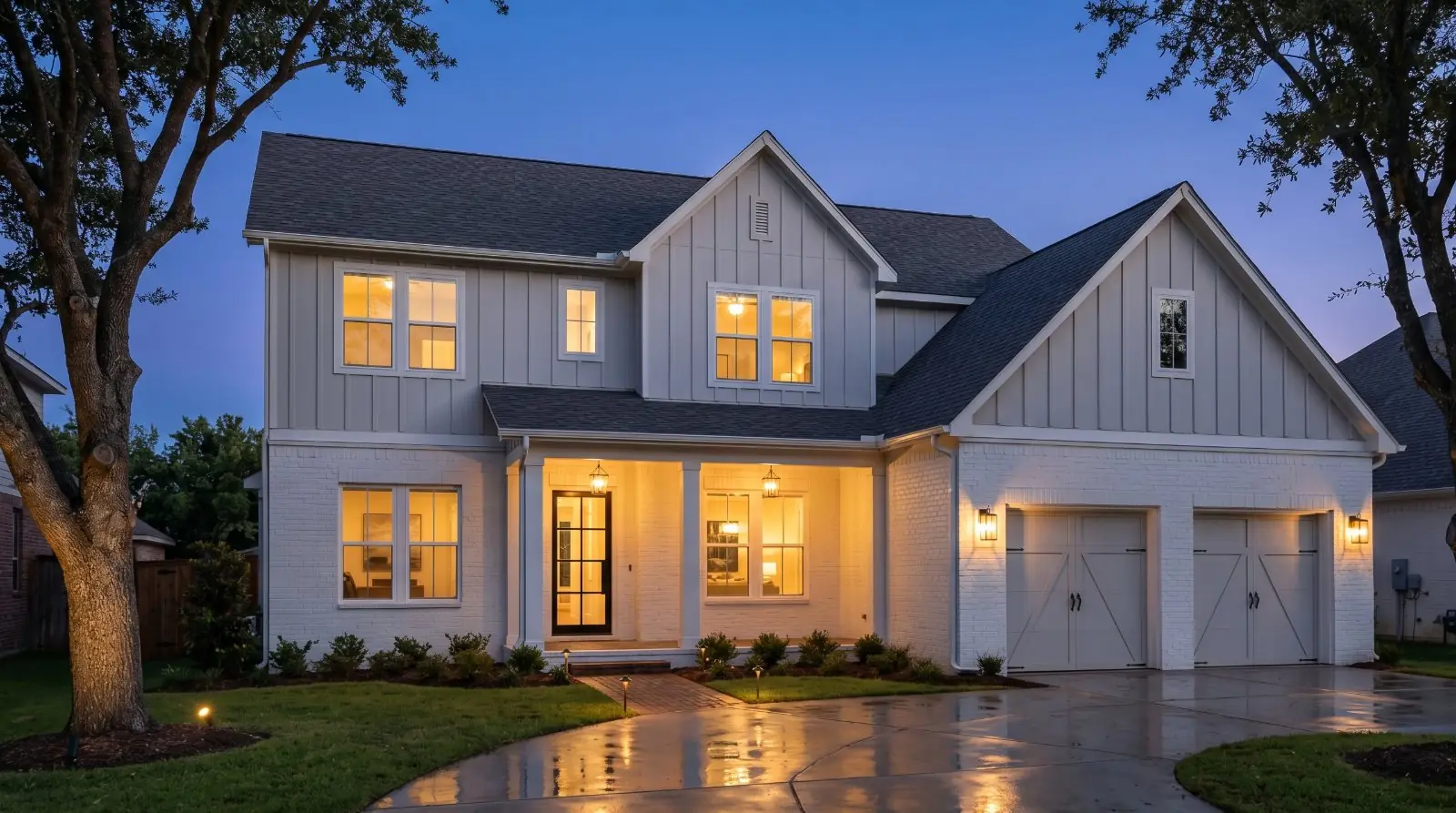
Shooting a winter exterior without it looking like winter
Bare trees, dead lawn, grey sky, a dirty driveway — compose so winter is the backdrop, not the subject.
Winter listings carry a hidden tax. The grass is dead. The trees are bare. The sky is grey. The driveway is dirty. Buyers scrolling past a winter exterior on the carousel read the photo as uncared-for or sleeping — even if the home is neither.
The fix is mostly composition, partly weather timing, and partly knowing which edits stay inside the NAR-and-state-law line.
The five winter conditions that make exteriors hard
Different conditions need different moves. Diagnose the photo before you change anything.
1. Bare deciduous trees. The most common condition. Strip-bare branches read as “winter” even when nothing else in the frame does.
2. Dead lawn — brown, beige, or patchy. Especially common in cold-winter Sun Belt markets (Texas, Arizona, the Carolinas) where Bermuda or zoysia grass goes brown for three to four months.
3. Snow on the ground. Either a clean white blanket or — far worse for listings — a melting, partial cover with brown patches and visible footprints.
4. Grey overcast sky. Common in northern markets December through February. Compounds with everything else.
5. Dirty hardscape. Salt streaks on driveways, road grit on porches, mud on walkways.
Most winter exteriors are committing two or three of these at once. The fix is rarely a single move.
The moves that work
Move 1 — Compose to crop the bare trees
If the only winter cue in the frame is the trees, crop them out. A horizontal composition framed to the rooflines or to the second-storey windows can include the house, foreground, and sky without including bare canopy.
This works best in side-light shooting — see The five-minute fix for flat exterior shots. The lower-third horizon and three-quarter angle naturally pull the camera away from the bare canopy.
If the bare trees are unavoidable, shoot at twilight so the trees go into silhouette and read as architectural elements rather than seasonal cues. See Twilight real estate photography on your phone.
Move 2 — Use the dead-lawn workarounds in order
The brown lawn is the hardest winter cue to neutralise. Three approaches, escalating:
a. Reframe to minimise the lawn. Tighter foreground composition. Step closer to the house, drop the horizon further, and put a hardscape element — driveway, walkway, planted bed — in the foreground instead of the lawn.
b. Shoot when the lawn is dewy or freshly watered. A wet lawn reads darker and more uniform than a dry one. Early morning, just after sunrise, is the easiest version of this.
c. Use post-processing colour correction to lift green tones in the lawn, restraining the edit to plausible levels. A small green-tone lift on a partially-brown lawn is generally treated as colour correction under the California AB 723 exclusions. Wholesale replacement of the lawn with a new lawn texture is alteration, not correction, and triggers California’s disclosure requirement, and almost certainly the NAR Article 12 misleading-impression standard. The line is real — see Sky replacement and the NAR disclosure question.
Move 3 — Embrace snow when it is clean, replace the sky when it is grey
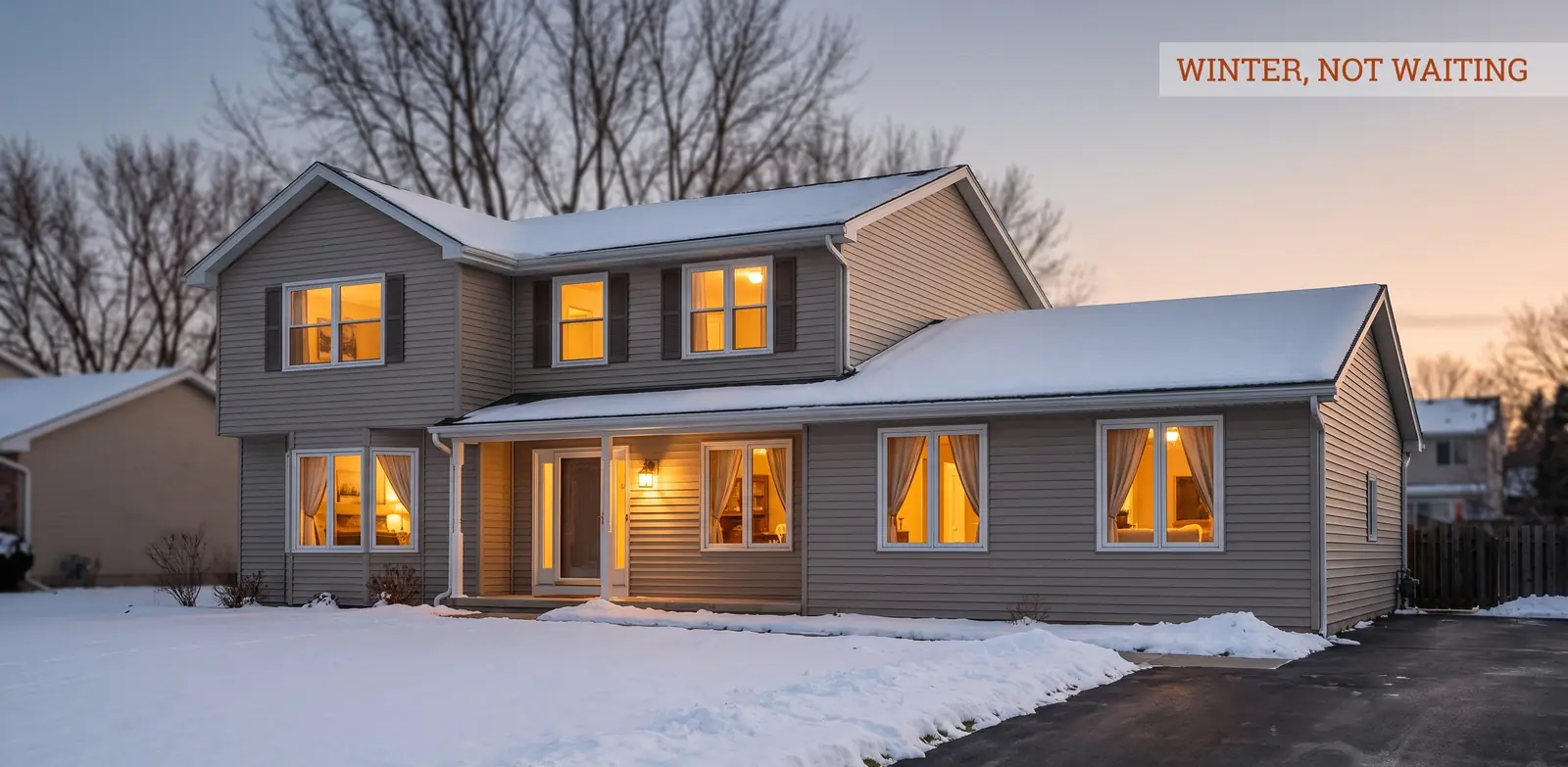
A clean, even snow cover on a grey-sky day can read beautifully if the sky is dealt with separately. The home looks crisp against the snow. The roof line is clean. The composition becomes graphic — black, white, and warm light from the windows.
What to do:
- Shoot in late afternoon side light if you can get sun. The shadows on snow are the most photogenic light available all year.
- Light the windows. Every interior light on. The warm window glow against the cool snow is the cue that makes a winter shot read as “welcoming” instead of “abandoned.”
- Replace the grey sky with a believable winter blue — disclose where required. This is the highest-impact single edit on a winter listing.
What to avoid:
- Patchy melting snow. Half-snow, half-mud is the worst possible exterior. Either wait for a full cover, wait for full melt, or shoot tight enough to crop out the patchy areas.
- Visible footprints in the snow. Read as “people have been trudging through here.” Pristine snow only.
Move 4 — Clean the hardscape
Sweep the driveway. Sweep the porch. If there is salt or road grit, rinse it off with a hose if temperatures allow, or sweep it. Mud on a walkway can usually be brushed away in two minutes.
This is the single cheapest winter upgrade. Buyers cannot articulate why a winter exterior reads as “cared for,” but a clean driveway is doing most of the work.
Move 5 — Light the windows from the inside
The single most powerful winter-exterior cue. Every interior light on. Curtains and blinds open. The warm-white pools of light visible through the windows read as home, not as building.
This is most effective at twilight but works in late-afternoon overcast too. The contrast between the cool exterior and the warm windows is the photo.
The edits that stay inside the line
Under California AB 723 (live now), Wisconsin Act 69 (effective 2027), and the broader NAR Article 12 standard, here is the practical line for winter shots:
The agent makes the call. The tooling supports the decision; it doesn’t make the decision.
The short version
You cannot turn winter into summer in a listing photo without crossing a line. You can compose the photo so winter is a backdrop instead of the subject, embrace clean snow when you have it, light the windows from the inside, and replace a flat grey sky with a believable winter blue. The right winter exterior reads as the home you want to come back to, not the home you cannot wait to leave.
Sources
- California Business and Professions Code § 10140.8 (AB 723): leginfo.legislature.ca.gov
- Wisconsin Statute § 452.136(1m): docs.legis.wisconsin.gov
- NAR — 2026 Code of Ethics
- ListedRight — Sky replacement and the NAR disclosure question
Winter, not waiting. The home they want to come back to.
Phone photos to market-ready listing images in 10 seconds. Twenty free when you sign up — no credit card.
One photo tip every Sunday.
Real techniques agents are using this week. No spam. Unsubscribe in one click.