Sky replacement and the NAR disclosure question
The most-used and most-misunderstood edit in real-estate marketing — and where it sits on the line between tonal correction and property alteration.
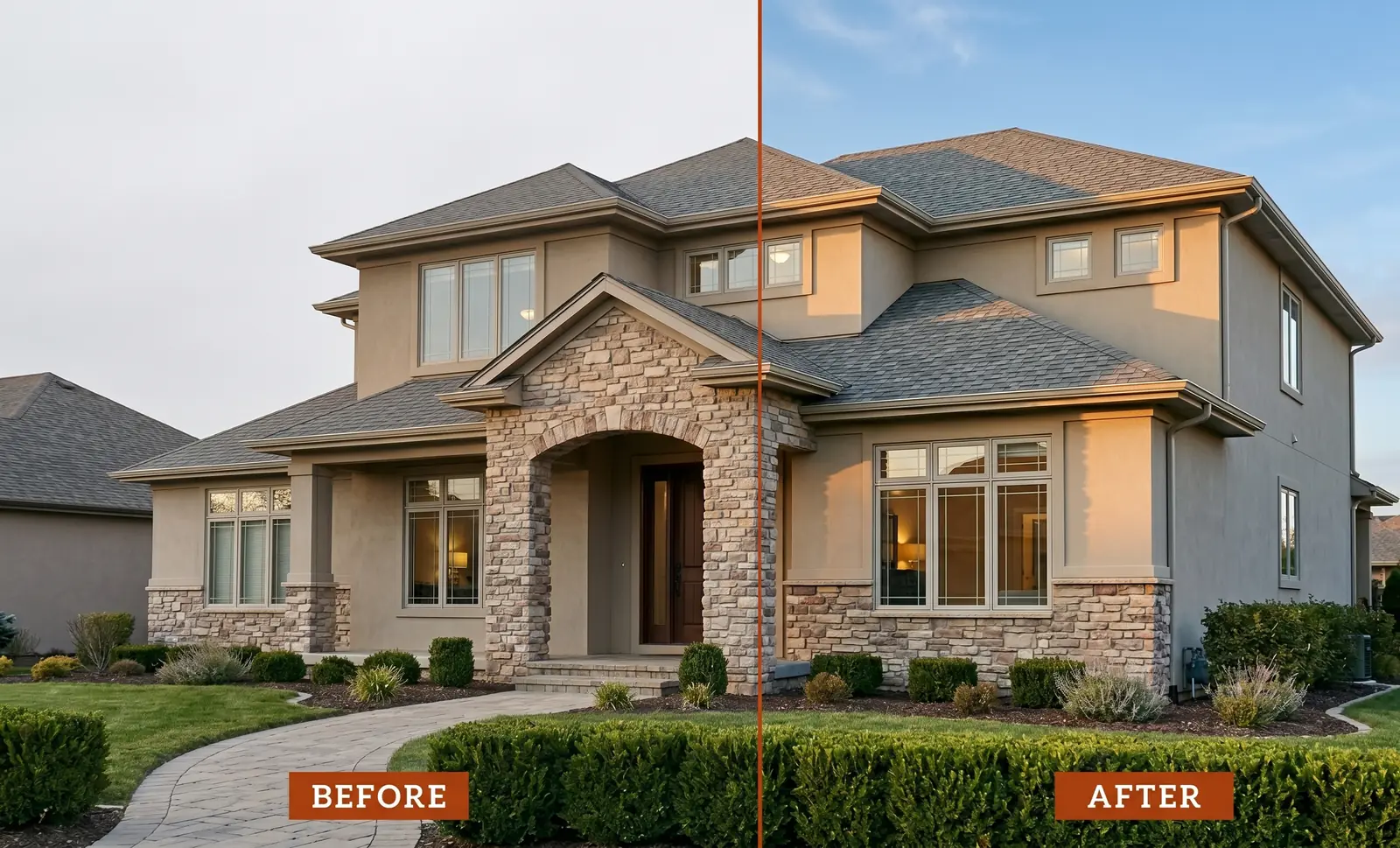
Sky replacement is the most-used and most-misunderstood photo edit in real-estate marketing. The reason: it sits exactly on the line between tonal correction and property alteration, and the NAR Code of Ethics — like most state laws — does not name it directly.
So the question keeps coming up: can I replace the sky on my exterior shot? The short answer is yes, with disclosure where required and with restraint everywhere else. The longer answer is worth reading once, so you can have it the next time it comes up.
What the NAR Code actually says
Two articles are operative:
Article 2 prohibits REALTORS® from “exaggeration, misrepresentation, or concealment of pertinent facts relating to the property or the transaction.”
Article 12 requires REALTORS® to “be honest and truthful in their real estate communications” and to “present a true picture in their advertising, marketing, and other representations.”
Standards of Practice 12-8 and 12-10 make Article 12 operational for digital media — including listing images on websites, MLS, and internet content. They explicitly cover manipulation of listing content that produces a deceptive or misleading result.
Neither Article 2 nor Article 12 names sky replacement. The standard the Code applies is “would this edit mislead a reasonable buyer about a fact relating to the property?” Source: NAR — 2026 Code of Ethics and Standards of Practice.
That is the test you run on every edit, not just sky.
Sky is usually not a property fact
Here is the practical interpretation that nearly every real-estate-photography body has settled on:
The sky above the house is not, in most cases, a fact about the property. It is a fact about the weather on the day of the shoot. Replacing a flat overcast sky with a clear blue sky changes the time of day or the weather, not the building, fixtures, landscape, or features of the property.
Under that interpretation, a sky replacement that does not alter trees, the roof line, the side of the house lit by sunlight, neighbouring buildings, utility poles, or visible weather hazards is generally treated as a non-deceptive edit.
Three things have to be true for it to land this way:
- The replacement sky is plausible for the property — not a tropical sunset over a Minnesota Tudor.
- The light direction on the house matches the replaced sky. If the house is lit from the right and the sky’s clouds are pulling left, the buyer can tell.
- Nothing in the building or its surroundings has been altered to suit the new sky.
Done badly, sky replacement breaks all three of these. Done well, it is invisible.
Where state law comes in
California — AB 723 (Business and Professions Code § 10140.8). Effective January 1, 2026 — live now. Requires reasonably conspicuous disclosure on or adjacent to any image that has been altered using AI or digital tools to add, remove, or change elements of the property, plus access to the unaltered original. The statute explicitly excludes basic edits — lighting, exposure, cropping, straightening, colour correction, sharpening, white balance — so long as they don’t change property representation.
Sky replacement is not explicitly named in AB 723’s exclusion list. Conservative California practice is to treat sky replacement as a disclosure-triggering alteration, label the image, and provide access to the original. A non-conservative reading is that sky-only replacement falls within “lighting” and is excluded — but no California enforcement decision has tested that reading yet. Until it does, disclose.
Wisconsin — § 452.136(1m) per 2025 Act 69. Effective January 1, 2027 — not yet live. Requires disclosure of advertising altered using technology, including AI, to add, remove, or change elements of the property, “that creates a false or misleading impression of the property.” The Wisconsin test is the misleading-impression test, narrower than California’s per-edit test. A clean sky swap on an overcast shoot that does not change other property elements has a defensible argument under Wisconsin law — but again, conservative practice is to disclose.
Other states rely on general advertising law, state license law, and federal deceptive-advertising rules under Section 5 of the FTC Act. There is no AI-specific federal carve-out. The standard is the same Article 12 test: would the edit mislead?
Source: ListedRight — AI disclosure landscape (full reference).
What good sky-replacement practice looks like
If you are going to replace the sky on a listing photo, four working rules:
1. Replace, do not transform. Swap a flat overcast sky for a similar- time-of-day clear sky from the same hemisphere. Do not turn a 9am overcast into a 6pm sunset. Do not turn a winter sky into a summer sky. The edit must be plausible.
2. Match the light direction. The shadow on the side of the house has to make sense with the new sky. If you cannot match it, do not replace the sky on that photo.
3. Don’t touch anything else. Trees, plants, roof, walls, paint, neighbouring buildings — all stay. The edit is sky only.
4. Disclose where required. California listings: label the image as digitally altered, provide the original. Wisconsin from January 2027: same. Everywhere else: align with your local MLS rules and your brokerage’s policy. When in doubt, label. Disclosure has never been a deal-breaker for a buyer who was already comfortable with the property.
When sky replacement is not OK
Three cases where sky replacement crosses the line:
1. The original sky disclosed a property fact. Heavy haze caused by an industrial neighbour. Smoke from a nearby fire. Flooded conditions visible in the sky reflections. These are property-adjacent facts and replacing them is misleading.
2. The replaced sky changes the apparent time of day or season in a way that misrepresents the listing’s natural light. A “twilight shot” that is actually a mid-day shot with a fake sunset is dishonest. If you want a twilight shot, take a twilight shot — see Twilight real estate photography on your phone.
3. The replacement is combined with other property edits — removing utility poles, removing the neighbour’s roof, adding a tree where there is none. The sky alone may be defensible. Sky plus three other edits is no longer “sky replacement”; it is alteration, and disclosure is the only path.
The short version
Sky replacement is the most defensible AI edit on a real-estate exterior — if done well, restrained, and disclosed where the state requires. California: disclose. Wisconsin in 2027: disclose. Everywhere else: apply the Article 12 test, match the light direction, do not touch the property, and prefer disclosure over the alternative. The NAR test is not whether the edit is allowed. The test is whether the photo still tells the truth.
Sources
- NAR — 2026 Code of Ethics and Standards of Practice
- California Business and Professions Code § 10140.8 (AB 723): leginfo.legislature.ca.gov
- Wisconsin Statute § 452.136(1m): docs.legis.wisconsin.gov
- FTC — Section 5 / AI deception: ftc.gov
- ListedRight — Plain-English guide to NAR Articles 2 and 12
Replace the sky, keep the truth. Disclosure handled.
Phone photos to market-ready listing images in 10 seconds. Twenty free when you sign up — no credit card.
One photo tip every Sunday.
Real techniques agents are using this week. No spam. Unsubscribe in one click.