Twilight real-estate photography on your phone — without waiting for dusk
Warm interior light, deep dusk sky, the sense that someone is home. The signature shot of every high-end listing — and how to get it without three trips to the property.
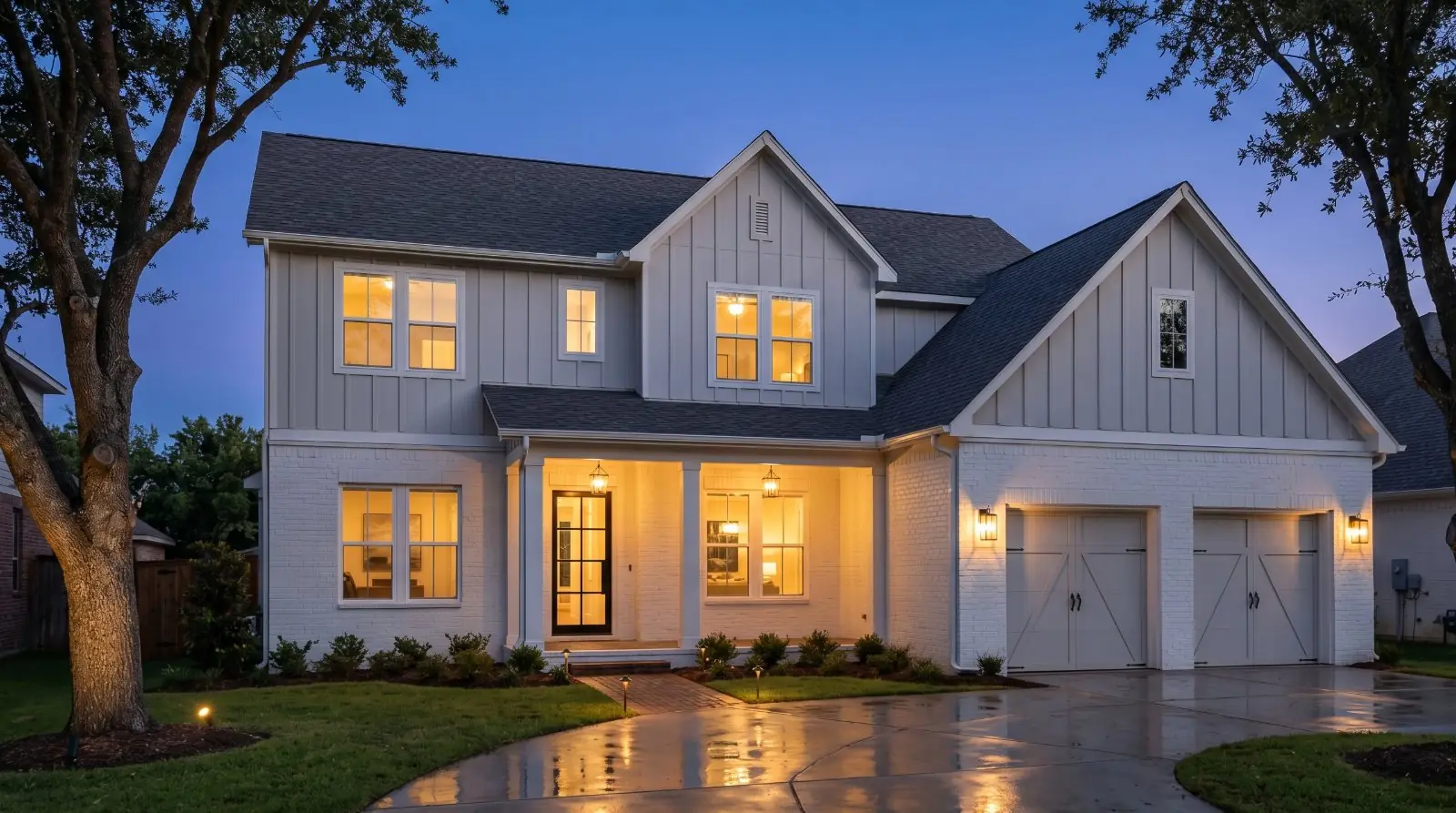
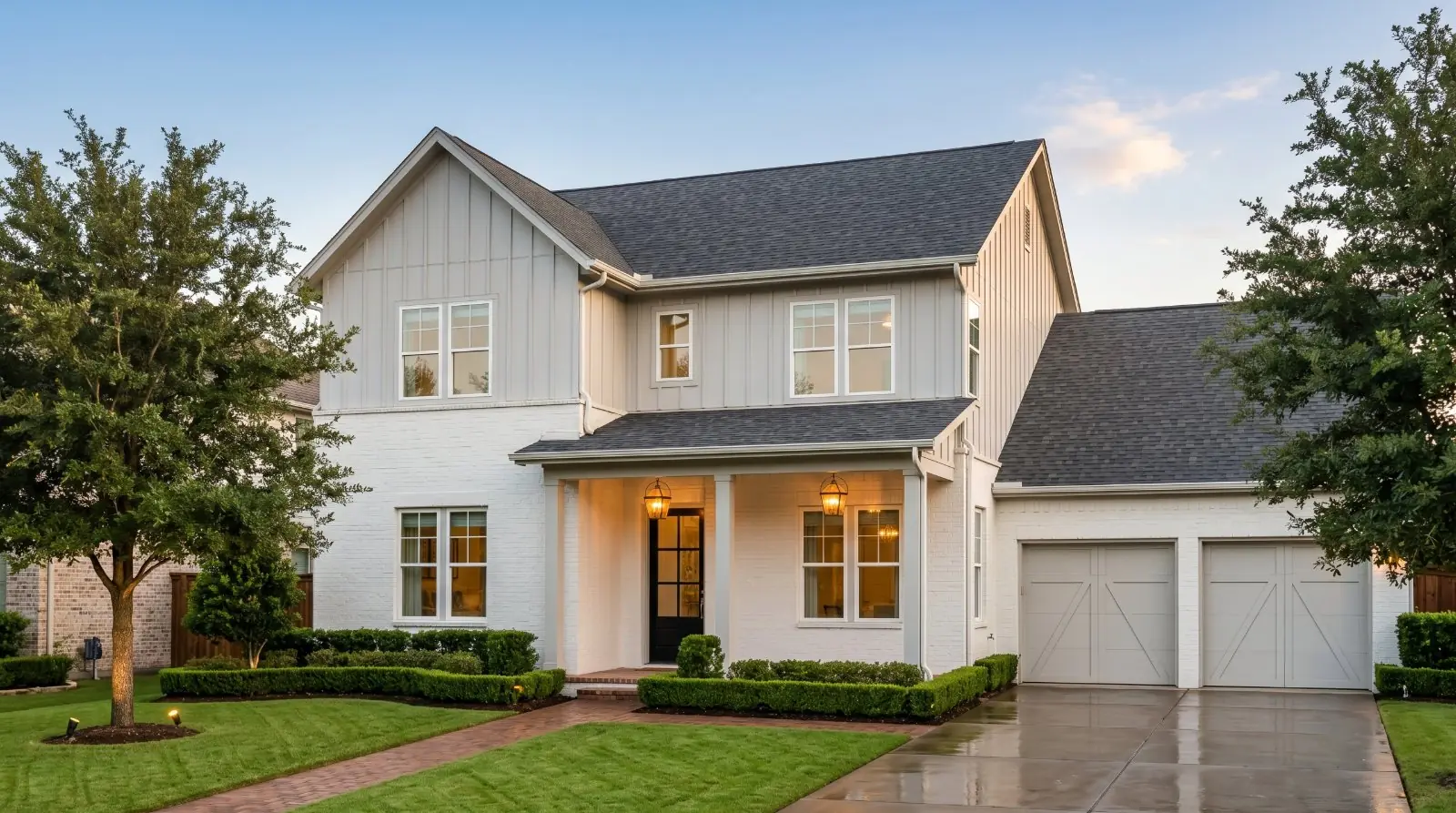
The twilight shot is the photo every luxury listing has and almost no mid-market listing does. The sky is a deep dusk blue, the interior is glowing warm through every window, a single lamp pools light on the front porch. The whole image reads as a place you’d want to come home to.
Buyers respond to outdoor and lifestyle features more strongly than agents often assume:
The twilight photo is the single most efficient image for showing both at once. It’s not just an aesthetic upgrade — it’s the visual answer to two of the questions the buyer is already asking about the property.
The reason mid-market listings don’t have this photo isn’t that it doesn’t work. It does, demonstrably. The reason is the production cost. A traditional twilight shoot is a 90-minute commitment with a tripod, a careful exposure setup, and at least one trip to the property purely for the dusk window. For a listing that’s going live in 48 hours and four other listings on the calendar, twilight has historically been the photo agents skip.
It doesn’t have to be anymore.
Why twilight works
There’s a specific reason a twilight exterior outperforms a daytime one on the click-through metrics that matter. Warm interior light against a cool exterior sky activates the same visual signal the eye reads when arriving home in the evening. The home looks lived-in, occupied, welcoming. A buyer scrolling listings at 10pm is in the same lighting state — warm interior, dark outside — and the twilight photo matches. The daytime photo doesn’t.
Luxury photographers have known this for thirty years. It’s why every Architectural Digest cover shoots at dusk. The signal is emotional, not technical, and it’s reliable.
The traditional way (and why most agents skip it)
The way pro real-estate photographers shoot twilight, before AI rendering existed:
- Arrive at the property 45 minutes before sunset.
- Set up the tripod at the chosen exterior angle.
- Turn on every interior light in every visible room. Open every blind.
- Set the camera to manual exposure. Bracket three exposures — one for the sky, one for the interior, one for the exterior shadow.
- Wait. The actual usable twilight window is roughly 20 minutes long — starts when the sky has dropped below the rooftops in brightness, ends when the sky is too dark to read as blue.
- Shoot the bracketed set multiple times across the 20-minute window.
- Blend the exposures in Lightroom or Photoshop the next day.
Total time: 90–120 minutes on-site, plus 30–60 minutes in post. Equipment: tripod, manual-exposure camera, post-processing software. Skill required: real photography skill, not amateur.
For a listing photographer charging $400–$1,200 for a luxury shoot, this is fine. For a working agent doing their own photos on Thursday before a Friday listing-live, this is impossible.
The phone-first way
The path that’s only existed for the last three years: shoot the exterior in flat daylight, render to twilight in post. Disclose the edit. Move on.
What this looks like in practice:
- Shoot the front exterior as you would any other daytime exterior shot — three-quarter angle, sun behind you, chest height.
- Upload the photo to a tool that handles day-to-twilight rendering with NAR-compliant disclosure tagging.
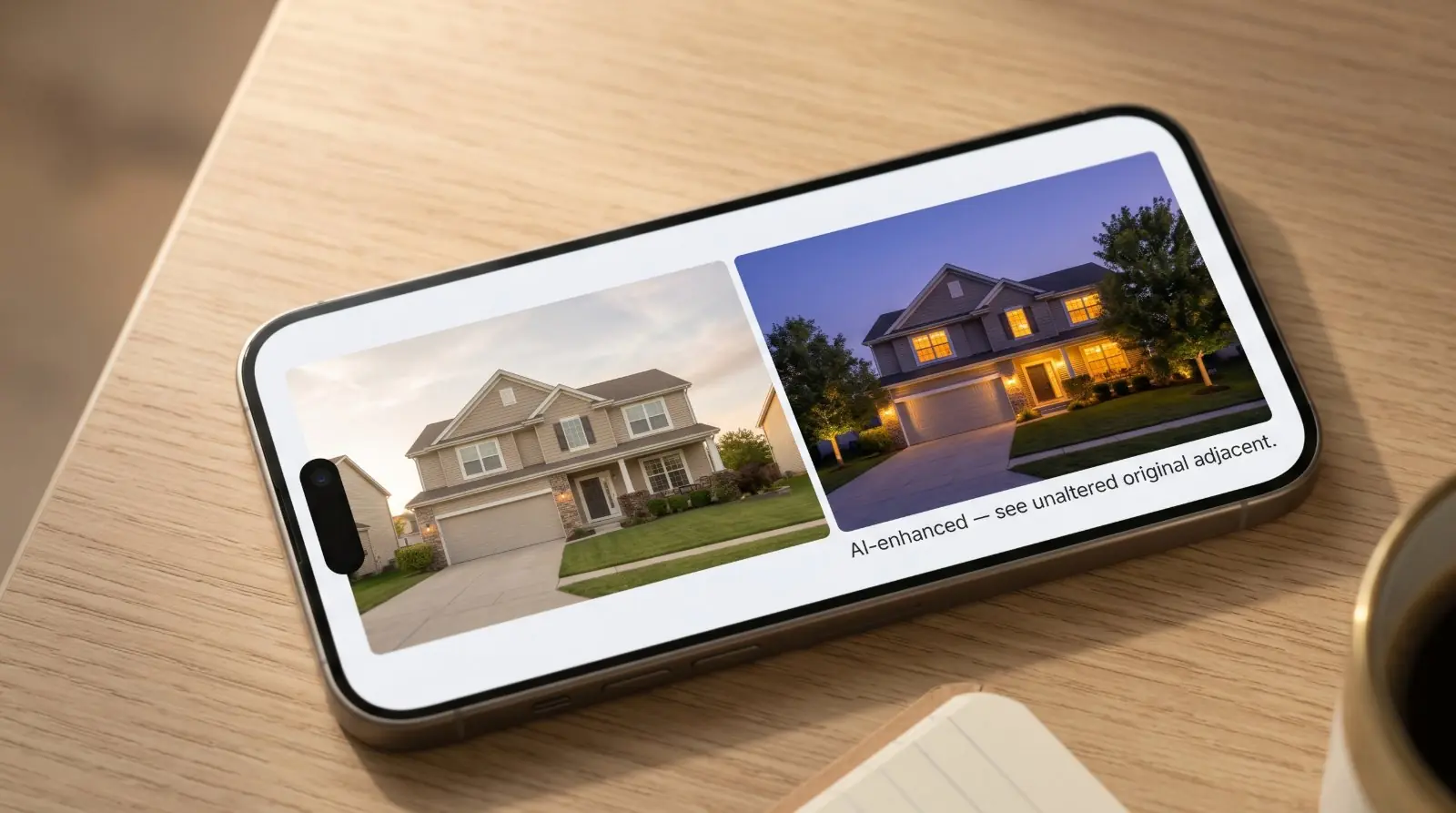
- The tool renders the dusk sky, brings up warm light in the visible windows, balances the colour temperature, and adds the “AI-enhanced” disclosure tag.
- Use the rendered image in the listing. The disclosure satisfies NAR Articles 2 and 12.
Total time: 60 seconds for the upload and render. Equipment: a phone. Skill required: knowing where to stand for the daytime exterior shot.
The cost differential matters even more than the time. A traditional twilight shoot from a professional photographer typically adds $200–400 to the listing’s photography spend in most US markets. For a starter listing, that’s a substantial percentage of the marketing budget. For a sub-luxury mid-market listing, it’s the difference between including a twilight image and not. Phone-first rendering removes the cost barrier entirely.
Pre-shoot prep — the rendered photo is only as good as the source
A day-to-twilight render can only work with what’s in the original frame. If the daytime exterior has no visible interior light geometry, the renderer can’t create warm glow that wasn’t there. If the curtains are pulled shut, the windows render as dark rectangles. If a kid’s bike is on the front lawn, it ends up in the twilight image — silhouetted, which is somehow worse than seeing it clearly in daylight.
Treat the daytime exterior as a deliberate setup for the eventual render, not a casual snap. Before pressing the shutter:
Inside the house, in rooms with windows facing the camera
- — Turn on every interior light. Every overhead, every lamp, every pendant.
- — Open blinds and curtains evenly on the front-facing windows. Half-open or crooked blinds read as messy in any image, but in a twilight render the window pattern is the focal point of the warm-light moment.
- — Position one lamp near each major front-facing window if the seller has spare lamps available. The warm pools of light immediately behind the glass are what makes the difference between “someone is home” and “someone left the overheads on.”
- — Turn off any television that’s directly visible through a front-facing window. A bright TV screen at the window reads as bizarre in a twilight image and screams this is not actually evening.
Note on interior visibility through windows: in a finished twilight render, the windows are bright glowing rectangles. The eye reads light spilling out, not legible detail of what’s inside. A puzzle on a dining table or a laundry basket halfway across the living room won’t show up. The only interior items worth worrying about are bright or aggressively-coloured objects positioned directly at a window — a TV screen, a neon sign, a large vase of red flowers right behind the glass.
Outside, around the exterior
- — Turn on porch lights, garage coach lights, path lights, and landscape lighting. They render correctly in the twilight image only if they’re actually on in the source.
- — Replace any burned-out exterior bulbs before the shoot.
- — Match bulb temperatures where possible. A porch light at 2700K warm and a garage coach light at 5000K daylight renders as two different-coloured lights and reads as careless.
- — Turn on pool and spa lights if visible. Run water features if working and clean.
- — Move all cars off the driveway and the immediate front area. A car in a twilight render is the most distracting thing in the frame.
- — Coil the hose. Hide the trash bins. Remove pool toys, kids’ bikes, and any temporary outdoor items.
- — Remove security signs visible to the camera if your brokerage allows.
Timing the daytime shoot
- — Shoot in late-afternoon light, 2–3 hours before sunset, for the most natural-looking twilight render.
- — If the front is north-facing or otherwise hard, bright overcast is acceptable — but the rendered twilight will be more painterly and less photo-real. Avoid heavy overcast or hard midday sun.
The 15 minutes you spend on prep before the daytime shot is worth more than any amount of post-processing. Pre-shoot quality is multiplicative; the renderer doesn’t fix bad setups, it makes them more dramatic.
The disclosure conversation
A rendered twilight shot is an AI-enhanced image. Under NAR Code of Ethics Articles 2 and 12, AI-enhanced listing photos require disclosure. There is no honest way around this and you shouldn’t want one.
The good news: disclosure is short, simple, and reads as professional to a buyer who notices it. The standard wording, used by most photographers who do twilight rendering, is something close to:
That sentence goes in the MLS remarks, in the agent’s standard listing disclosure, or as a small caption on the image where the platform allows. It satisfies the rule. It also signals that the listing agent operates above board, which is the brand the buyer wants to work with.
Three states have caught up — and your state may be next
State law in 2026 is no longer hypothetical on this. Three US states have specific enacted legislation governing AI-altered and digitally altered real-estate images, with each rule reaching twilight rendering directly:
- — California — AB 723. Live as of January 1, 2026. Applies to brokers, salespeople, and persons acting on their behalf. Requires disclosure of digitally altered real-estate images in advertising and promotional materials, with the disclosure placed reasonably conspicuously on or adjacent to the altered image, and requires that the unaltered original image be made available. AI use is expressly included in the definition.
- — Wisconsin — § 452.136(1m), per 2025 Wisconsin Act 69. Takes effect January 1, 2027. Requires licensees to disclose in advertising when technology — including AI — has altered or modified property elements in a way that creates a false or misleading impression.
- — Colorado — Senate Bill 189. Takes effect January 1, 2027. Requires disclosure when AI tools are used in real-estate and housing applications.
New York’s Senate Bill S9584 is in committee and would extend similar disclosure requirements to materially misleading digital representations. Other states are tracking similar legislation.
For agents in California, the rule is current law and the standard practice is established: disclose, place the disclosure on or adjacent to the image, and make the unaltered original available. For agents in Wisconsin and Colorado, the same standard applies on January 1, 2027 — and there’s no advantage in waiting. For agents everywhere else, the realistic posture is that your state’s version is coming. Operate as if AB 723 already applies in your state. The downside of pre-emptively disclosing is approximately zero; the downside of being caught unprepared when your state passes its version — or when a complaint reaches your state real-estate commission — is significant.
When twilight is wrong
Twilight rendering isn’t appropriate for every listing. Six categories where it falls flat — or worse, hurts the listing:
The rule: match the shot to the listing. Twilight is a tool, not a default. If you have to argue yourself into using twilight for a particular listing, the answer is probably no.
What good twilight rendering looks like — and what bad rendering looks like
A well-rendered twilight image has three things right:
- The sky matches the lighting on the house. If the front of the house has shadow on the left side and light on the right, the sky and ambient light in the rendered image should be consistent with that.
- The interior light is in the windows, not painted across the front of the house. Real twilight light spills out through window openings only.
- The colour temperature gradient is continuous. A real twilight scene has cooler colour higher in the sky and warmer colour closer to the ground and the house.
What bad rendering looks like:
- — Bright Photoshop-blue sky over a house lit by daytime sun.
- — Window glow that’s the same warm tone in every room of the house (real interiors have mixed colour temperature — a kitchen reads cooler than a living room).
- — Stars or a moon added to the sky (almost always a tell — real twilight is too bright for stars to be visible).
- — A halo of warm light around the entire house silhouette.
- — Mismatched bulb temperatures across visible windows. If one window glows 2700K warm and the next is 5000K daylight, the rendered image reads as fake even if every other element is perfect. Replace inconsistent bulbs before the shoot.
- — Reflection inconsistencies. Pool surfaces and glass storm doors are the reflective elements that most reliably show up in a front-exterior render — both should reflect the rendered sky and the rendered exterior lights, not the daytime original.
If you’re using a tool that produces any of these tells, the rendering isn’t ready. A bad twilight shot is worse than no twilight shot.
How many twilight photos belong in the gallery
More is not better. A gallery full of twilight images reads as overproduced. The right count varies by listing:
The buyer doesn’t need to be told the same emotional story repeatedly. One strong twilight image does more work than five medium ones. If the second twilight doesn’t add information the first didn’t, cut it.
For gallery sequencing: the daytime exterior should still come first. Buyers need to understand what the property looks like in normal conditions before the emotional twilight image lands. Standard order: daytime front exterior at slot 1, twilight front exterior at slot 2 (or earned higher if it’s genuinely the listing’s strongest single image).
Listing tier — when twilight earns its place
Twilight is a luxury and lifestyle tool by nature. The tier breakdown:
Affordable / starter listings (typically under $400K)
Skip twilight. The audience reads it as overselling. A clean, well-lit daytime exterior outperforms a twilight render on this segment of the market every time. Spend the time on pre-shoot cleanup of the curb instead.
Mid-market listings ($400K–$1M)
Selective use. Twilight earns a slot when the listing has at least one of: a pool, a substantial backyard/patio with visible outdoor lighting, strong architectural front elevation, large windows that will glow well, or evening curb appeal worth showing. Skip it when the property is competent but unremarkable.
For mid-market listings with outdoor features specifically, the data supports the case:
Pool listings, outdoor kitchens, fire pits, covered patios — these are exactly the features twilight photography is designed to showcase, and they’re the features that justify the additional image when the listing has them.
Luxury listings ($1M+, definitively at $1.5M+)
Essentially expected. Luxury buyers expect a level of marketing that includes a twilight hero image. The traditional twilight shoot is still common at this tier — and the additional cost is more easily absorbed into the marketing budget — but phone-first rendering produces equivalent results when done well. Whichever route you go, the photo needs to be there. A luxury listing without a twilight image reads as under-invested.
For luxury, the gallery often includes: front exterior at twilight; rear exterior at twilight if there’s a pool or strong outdoor-living space; one additional twilight detail (the outdoor kitchen, the fire pit, the view, the architectural feature); drone twilight if the listing warrants and local airspace allows.
The before-and-after
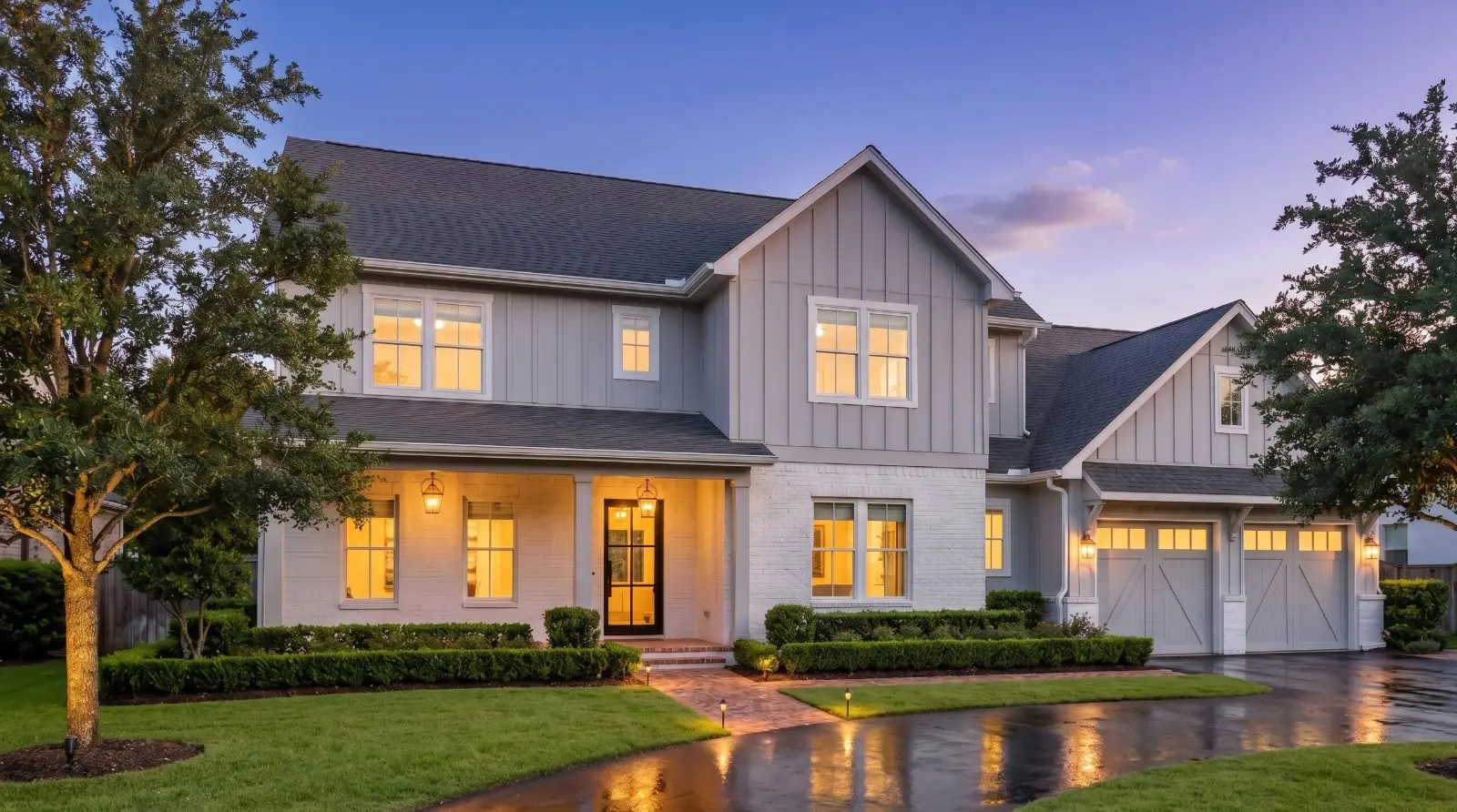
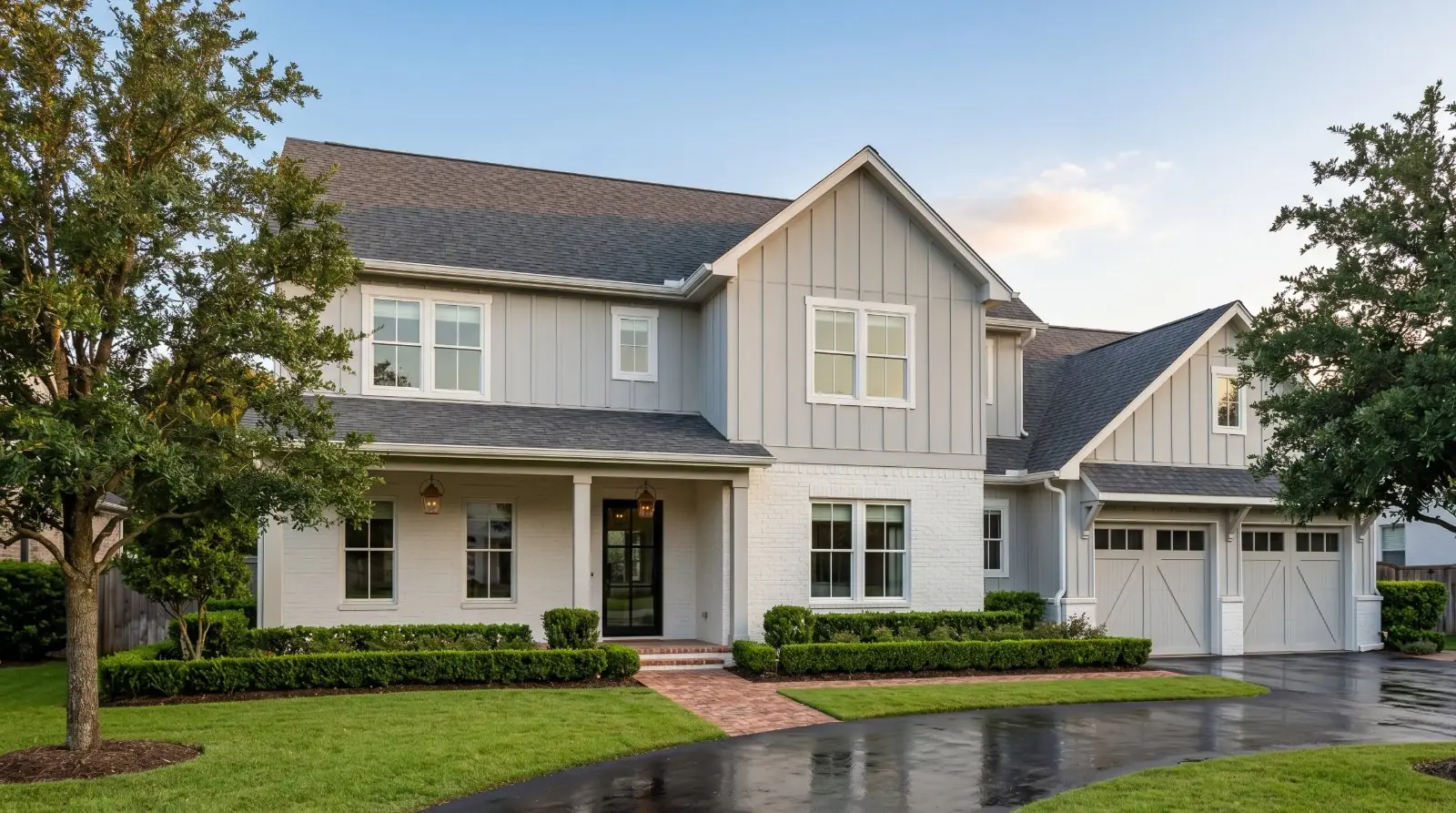
The exact same source photo. The rendering replaces the sky, balances the colour, and lifts the visible interior lights into a warm glow. The disclosure tag attaches automatically. For most listings worth $400K and up with strong exterior architecture, this is the photo that earns the click.
Day to twilight in 10 seconds. NAR disclosure attached automatically.
Phone photos to market-ready listing images in 10 seconds. Twenty free when you sign up — no credit card.
One photo tip every Sunday.
Real techniques agents are using this week. No spam. Unsubscribe in one click.