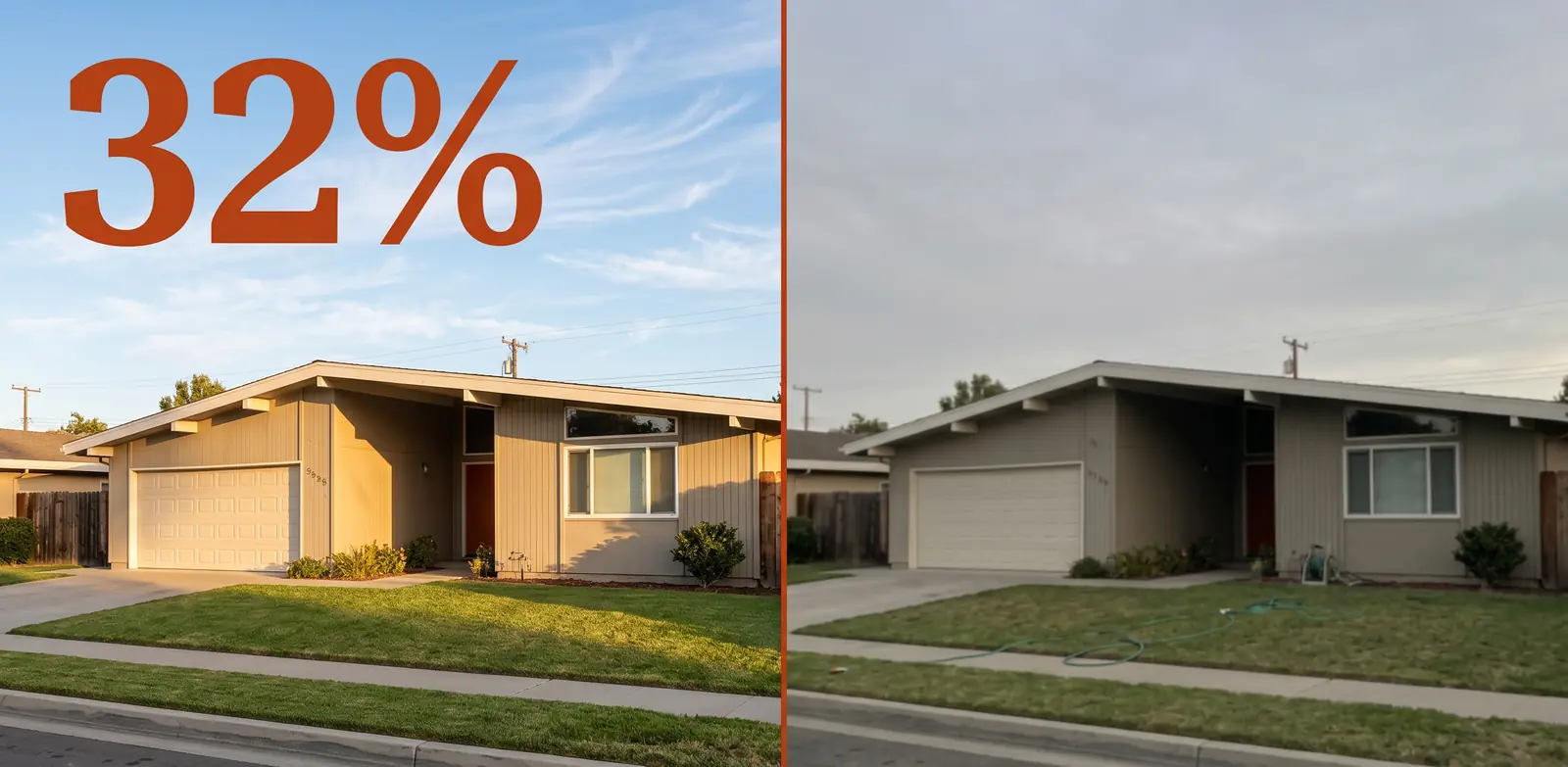
Why buyers spend 80% of their listing time on the photo carousel
Eye-tracking has measured it for over a decade — the carousel is where the buying decision is made, and the description is a distant second.
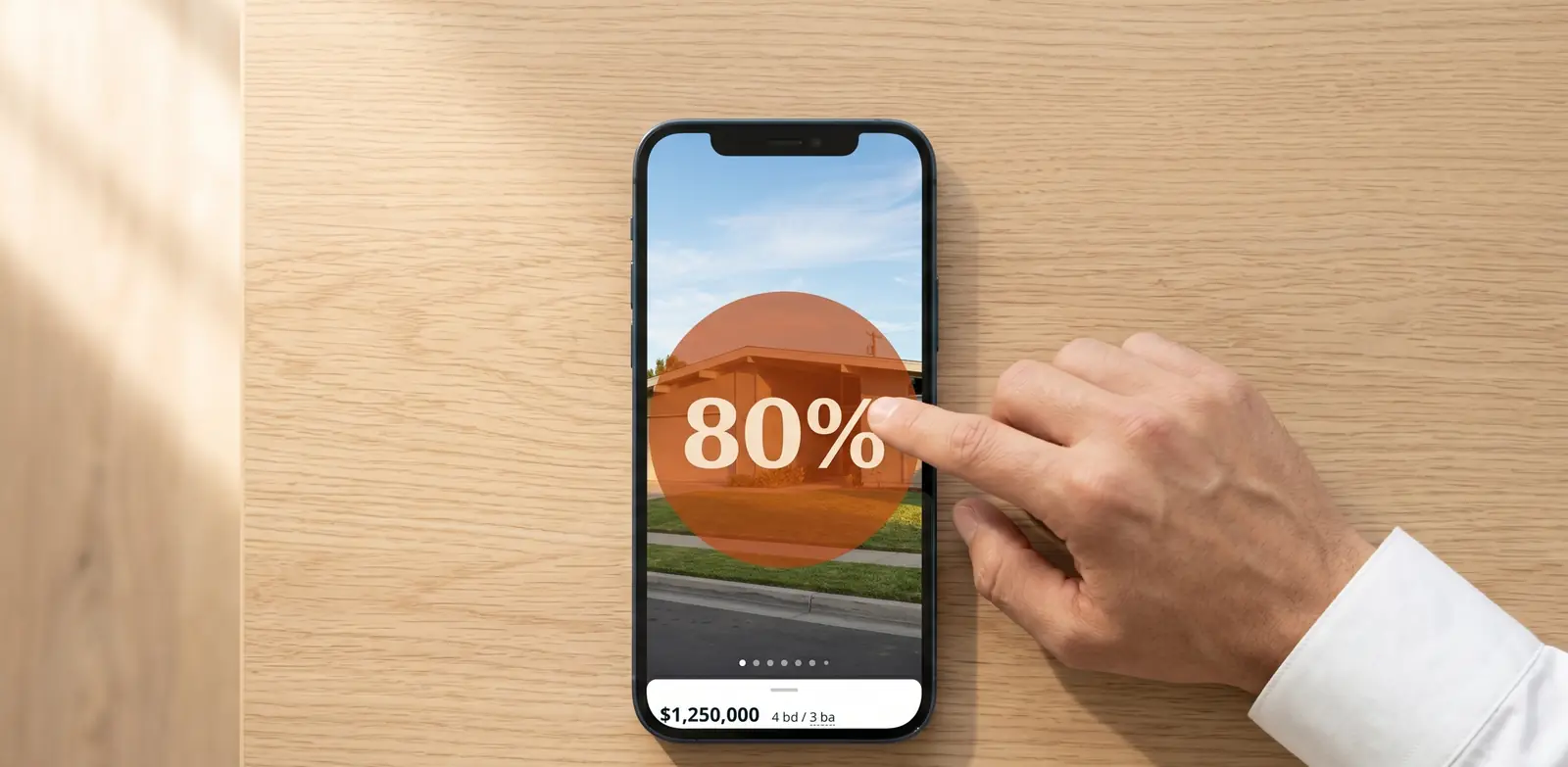
Open any listing on Zillow, Realtor.com, or Compass and watch what happens with the buyer’s hand. They thumb through the photos. They go back to a photo. They open one full-screen. They scroll the description for about three seconds, then return to the photos. By the time they have made up their mind, they have spent the overwhelming majority of their attention inside the photo carousel.
The number that gets cited is 80%. The studies behind it actually report a range. Either way, the takeaway is the same — and it changes how an agent should think about a listing.
Where the 80% comes from
The most widely cited source is a WAV Group / NAR eye-tracking study of online listing-search behaviour, originally conducted with The Real Estate Book in the early 2010s and refreshed in subsequent industry reports.
The study put eye-tracking glasses on prospective buyers as they reviewed real online listings. It measured where the eye actually went — not where buyers said it went. The headline finding:
- ~60% of visual attention on the primary photo
- ~20% of attention on the rest of the photo carousel
- ~20% of attention split across the description, agent contact, and listing metadata
Add the primary photo to the rest of the carousel and you reach roughly 80% of buyer attention on the images.
More recent industry replications by Zillow and Properly (in Canada) have produced similar splits — different exact numbers, but the carousel always dominates, and the description is always a distant second. The directional finding has held up across more than a decade of research, multiple platforms, and changes in what listings look like.
Why this happens
It is not laziness. It is how buyers triage.
A buyer at the top of the funnel may have 40 to 80 listings open across the week. They are not reading 80 property descriptions. They are scanning 80 hero photos, opening the carousel on the 12 that earned a second look, and reading the description on the three they are seriously considering. The photo carousel is the filtering layer, and almost all the decisioning happens there before any words are read.
The National Association of Realtors backs this up from the buyer-survey side: 41% of buyers find listing photos “very useful” during search — more than floor plans, neighbourhood information, or virtual tours. Source: NAR — 2024 Profile of Home Buyers and Sellers Highlights.
The same survey reports that 51% of buyers find the home they purchase through online search, and 69% of buyers use a mobile or tablet device during the search process. The buyer is doing this triage on their phone. The carousel is what they swipe through.
What it means for the listing
If 80% of attention is on the carousel, then the carousel is the listing. The description supports the photos. The agent’s reputation supports the photos. The CMA, the open-house schedule, the broker brand — all support the photos. The order of operations on a listing is photos first, everything else second.
Practically, that translates into four working rules:
1. The hero photo earns the click. It does not have to be perfect. It has to be sharp, well-exposed, recognisable, and clearly the property. A dark or angled hero is a listing the buyer will scroll past on the search results page.
2. The first five photos earn the deeper look. Eye-tracking shows that buyers spend disproportionate time on the first three to five carousel slots. Front exterior, main living space, kitchen, primary bedroom, primary bathroom — in that rough order — should be your strongest five.
3. The middle of the carousel earns the showing. Buyers who reach photo 10 are buyers who are considering this property seriously. This is where layout, storage, secondary rooms, and outdoor space get judged. None of these can be filler.
4. The last photo is what they remember. Buyers tend to remember the first and the last shot most clearly. End on something strong — a backyard, a view, a sunset, a finished basement, a primary suite — not on a closet or a utility room.
What it does not mean
It does not mean the description is dead. Buyers who actually book a showing do read it — sometimes carefully. The description is where the kitchen renovation date, the school district, and the new HVAC live. The 20% who get to the description are the 20% who matter most, because they are the buyers actively considering a tour.
The short version
Buyers spend roughly 80% of their listing-page attention inside the photo carousel. The split has been replicated across more than a decade of research. The implication is straightforward: spend your prep time on the photos, in the order buyers actually look at them, with a strong hero and a strong final shot. The description still matters — but it matters to the buyers who already swiped through your carousel without bouncing.
Sources
- WAV Group / The Real Estate Book — eye-tracking studies of online listing behaviour (multiple editions, 2012–2020)
- NAR — 2024 Profile of Home Buyers and Sellers Highlights
- Zillow Research — listing-engagement reporting (multiple editions)
The carousel is the listing. Make every frame hold up.
Phone photos to market-ready listing images in 10 seconds. Twenty free when you sign up — no credit card.
One photo tip every Sunday.
Real techniques agents are using this week. No spam. Unsubscribe in one click.