The $30 mini tripod that pays for itself in one shoot
The cheapest, smallest, most boring piece of gear you will own — and the one that does the most for the quality of your listing photos.
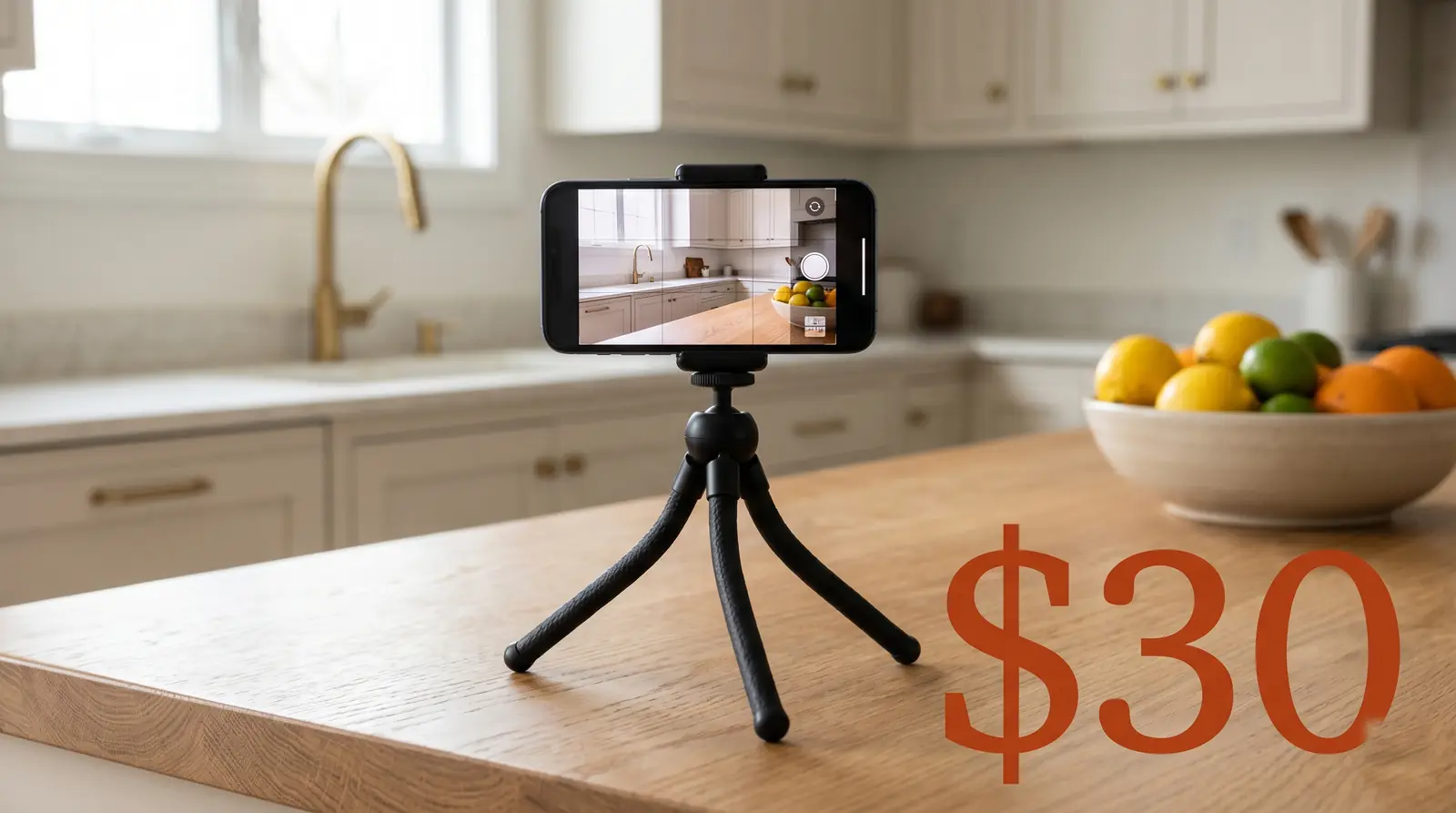
If you only buy one accessory for listing photography, buy a mini tripod with a phone clip. About $30 retail. About four ounces in your bag. It does more for the quality of your listing photos than any other single piece of equipment you can carry.
This is the case for the cheapest, smallest, most boring piece of gear you will own — and why it is the one that earns its place.
What it actually does
A handheld phone shot at the wide focal length used for interior photography picks up small camera shake even when you cannot feel it. The shake comes from the shutter button press, from the slight bow of your wrist, from breathing. On a phone screen, the shot looks fine. On a desktop monitor — which is where the buyer compares listings at the kitchen table — the shot is soft.
A tripod removes the shake entirely. The phone is held by the clip. The shutter is triggered with the volume button, the Apple Watch, or a Bluetooth remote, so no finger touches the phone during the exposure. Every photo lands sharp.
Three other things it does that hand-held cannot:
1. It locks the camera level. Vertical walls stay vertical. A tilted vertical is the single most common phone-photo failure on listings, and a level tripod fixes it before you tap the shutter.
2. It makes exposure lock predictable. You set exposure, you frame, you trigger — without the camera moving between any of those steps. The result is consistent exposure across every photo in the shoot, which is what makes a listing carousel read as a coherent set instead of a stitched-together one.
3. It enables low corner shots and high pantry shots. A flexible-leg model can wrap around a stair rail, perch on a counter, or sit flat on the floor for a low-angle bedroom shot. A rigid model on a windowsill or shelf does the same job most of the time.
Why $30 is enough
You do not need the $200 tripod. The $30 models — Joby GorillaPod Mobile, Manfrotto Pixi Mini, Ulanzi MT-08, several near-clones from any major reseller — are mechanically the same as the ones a professional uses for casual phone work. The phone is light. The tripod does not have to be expensive to hold it.
What you should look for:
- Flexible legs, ideally the wraparound style. A rigid mini-tripod works for tabletop, but the wraparound style is the one you actually use because it perches anywhere.
- A standard 1/4-inch screw mount at the top, with an included phone clip. The clip is the part that varies in quality — make sure it grips the phone firmly and rotates between portrait and landscape without slipping.
- A small, light, neutral build. You will throw this in a side pocket and forget about it. Nothing should rattle, nothing should snag.
What you do not need: ball heads, level bubbles, panning bases, extending legs, or aluminium construction. These are all useful on a full-size tripod. They are overkill for phone listing work.
When it pays for itself
The break-even moment is the first listing where the buyer sees a sharp, level photo carousel instead of a soft, tilted one. The dollars saved are not in the equipment — they are in the days-on-market.
Industry analyses from VHT Studios consistently find that listings with cleaner photography sell closer to list price in mid- and upper-tier price bands. One percent of a $400,000 listing is $4,000. The tripod paid for itself 130 times over.
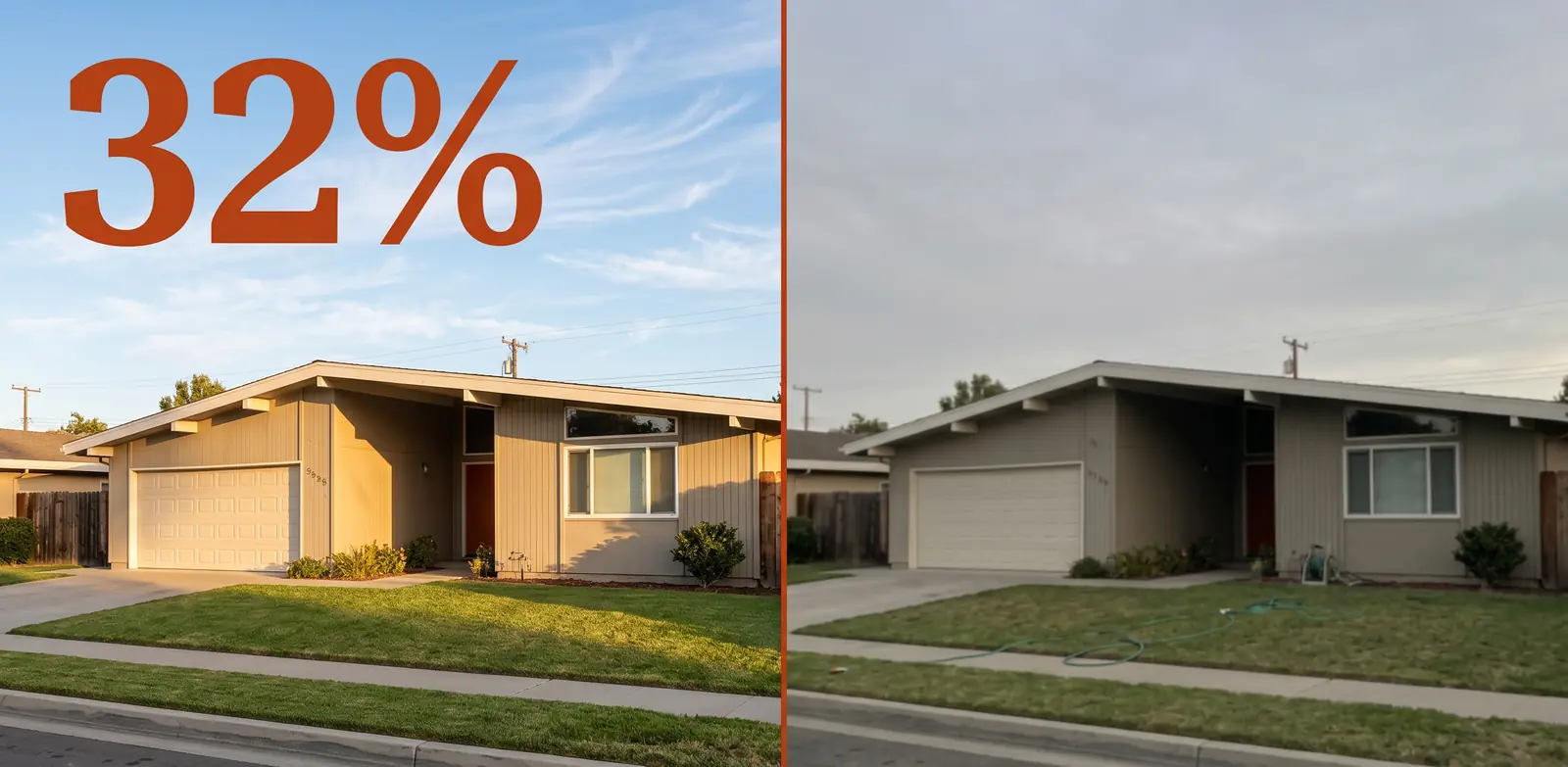
The same logic applies to the broader days-on-market effect. The 2013 Redfin study found that listings with better photography sold up to 32% faster in some price bands (the data behind the 32% faster sale figure). The sharpness of the photo is not the whole story, but it is the easiest part of the story to control for $30.
The honest case against
A tripod takes 15 seconds longer to set up per shot. A 25-shot listing turns 25 hand-held seconds into roughly six minutes of tripod time. That is real time. The trade is that every one of those 25 shots is sharper, more level, and more consistent — and you will not be doing the shoot a second time.
If you are a strict speed shooter who does five listings a week, the tripod still wins. If you cannot bring yourself to use it, at least keep it in the bag for the kitchen, the primary bedroom, and the front-of-house shot. Those three are the photos buyers spend the most time on.
The short version
A $30 mini tripod is the highest-leverage piece of gear you can buy for listing photography. It removes camera shake, levels your verticals, and lets you exposure-lock without drift. It costs less than a kitchen takeout dinner and earns its place inside the first listing you carry it on.
Thirty dollars. Sharp, level, every shot.
Phone photos to market-ready listing images in 10 seconds. Twenty free when you sign up — no credit card.
One photo tip every Sunday.
Real techniques agents are using this week. No spam. Unsubscribe in one click.