Why your bathrooms look smaller than the room — and how to fix it
Bathrooms are where the gap between how a room feels and how it photographs is widest — and it’s almost always the photographer’s fault, not the room’s.
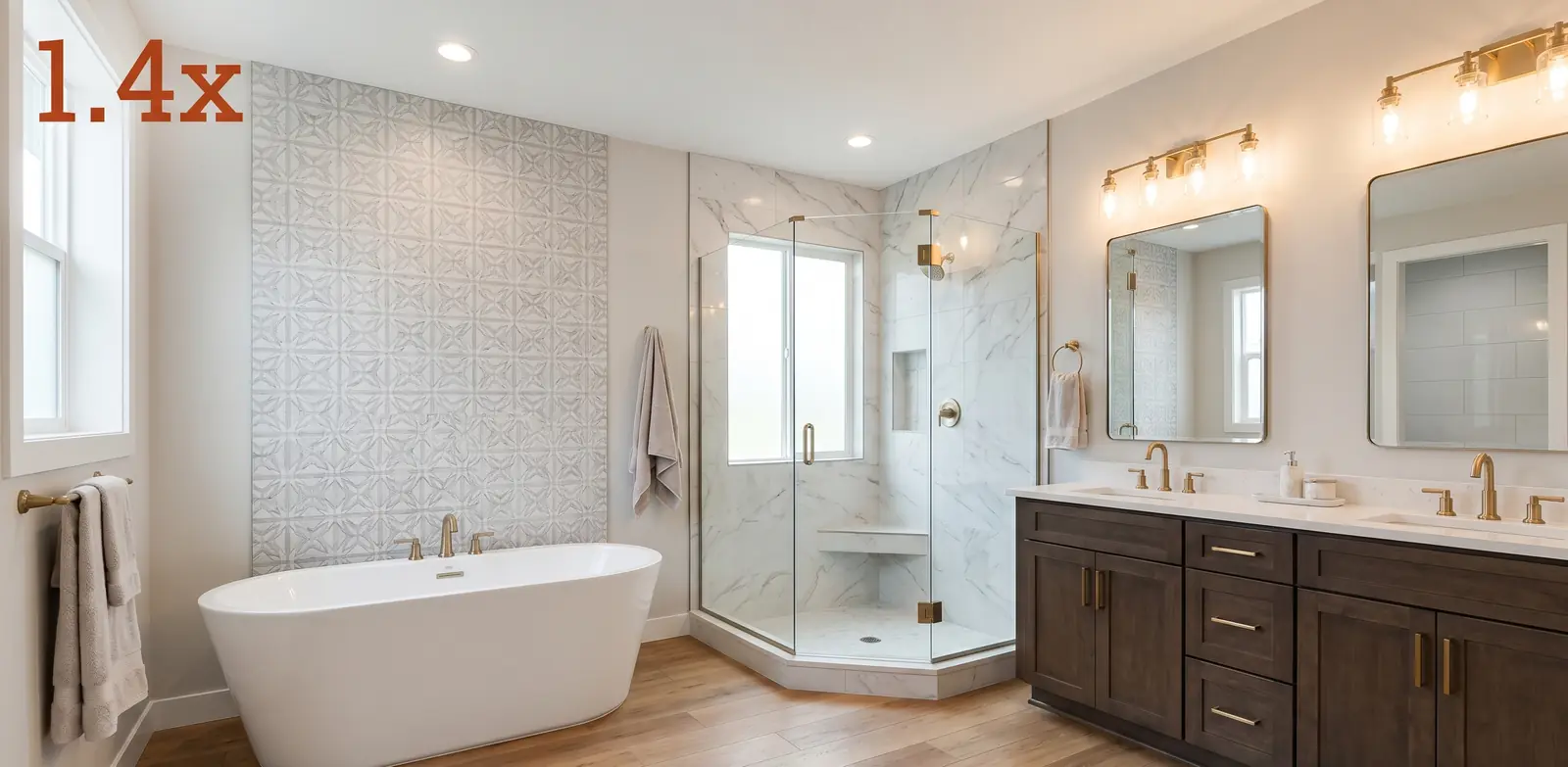
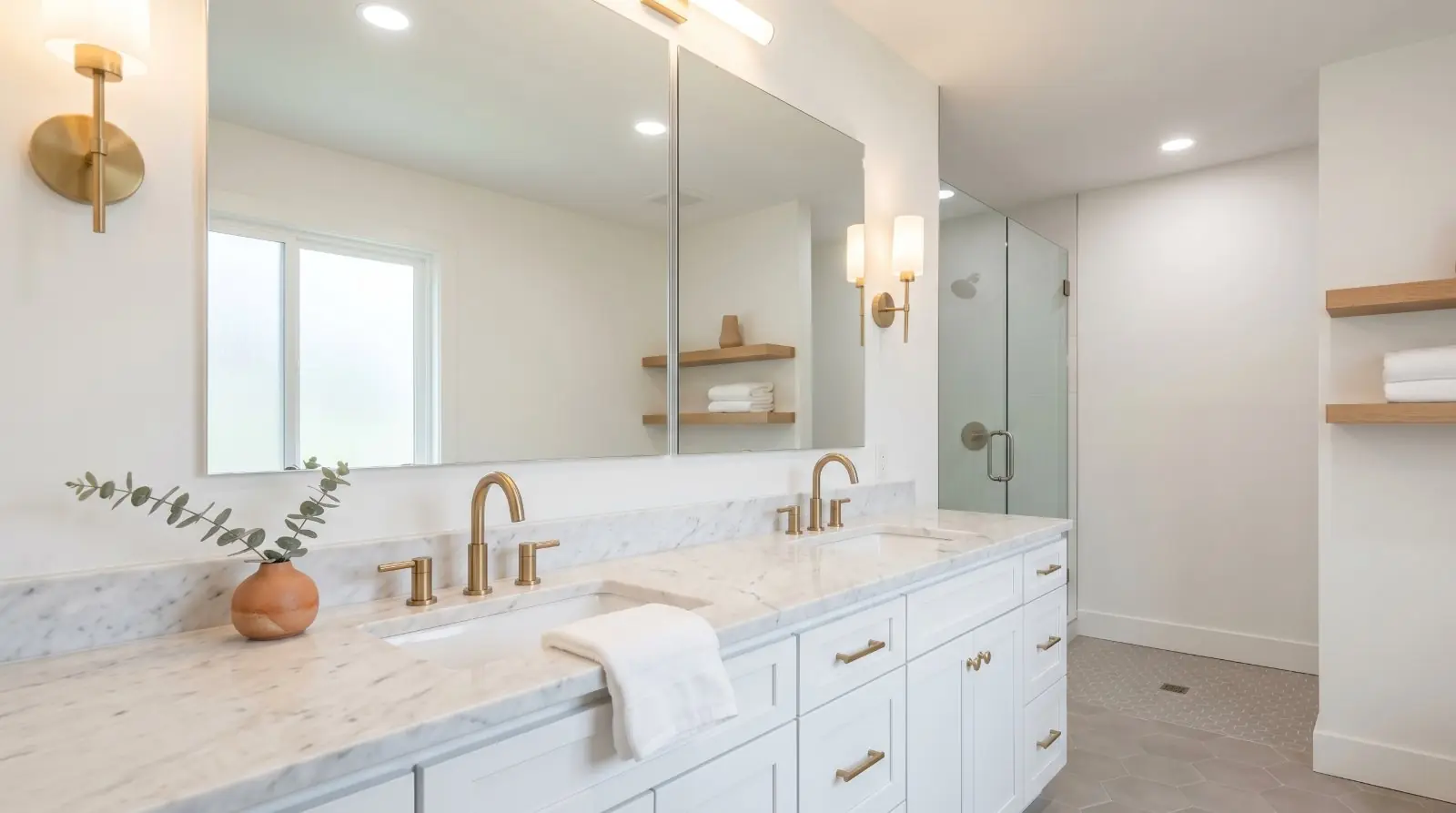
Stand in a primary bathroom and it feels generous. Take the photo from the doorway and it looks like a closet. Bathrooms are the room where the gap between “how it feels in person” and “how it reads on the listing” is widest, and the misread is almost always the photographer’s fault — not the room’s.
Here is why it happens, and the four moves that fix it.
The longer version with full pre-shoot checklist lives at Bathroom photography for residential real estate listings.
Why bathrooms photograph small
Bathrooms compress in photos for four specific reasons, and most failed shots are committing all four at once:
1. The room has too many planes close together. A bathroom is the most plane-dense room in the house: tub edge, toilet base, vanity, counter top, mirror, tile, three or four walls within arm’s reach. The phone’s wide lens flattens those planes onto each other, making the whole room feel like a stacked layer of surfaces.
2. The mirror reflects the photographer. Or the tripod. Or the doorway. The reflection eats visual space that should be reading as room depth, and the buyer’s eye locks onto the reflection instead of the layout.
3. The light is mixed. Vanity bulbs are usually warm. Ceiling can lights are often cool. The window — if there is one — is daylight. The camera’s white balance picks one and the others go wrong, which makes the room read as muddy or yellow.
4. The shot is taken from the doorway. Same problem as every other room. The doorway is the narrowest point of the bathroom’s perimeter, and the camera there sees a corridor, not a room.
Bathrooms can survive any one of these. They cannot survive all four.
The four fixes
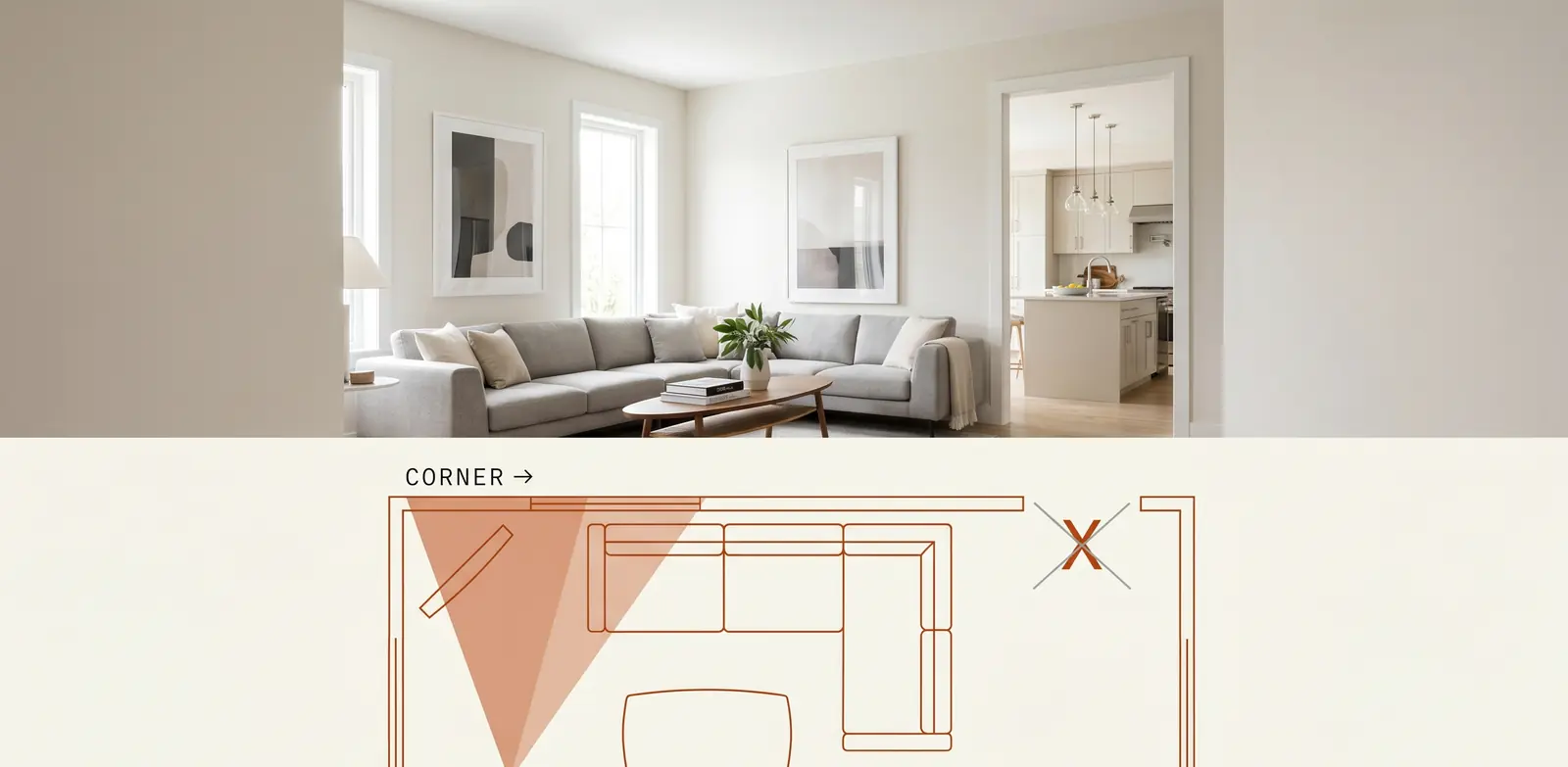
1. Step inside the bathroom and shoot from the corner
Most bathrooms have one usable corner — the corner opposite the vanity or opposite the tub. Get into it. Camera in the actual corner, not in the doorway.
In a small bathroom the corner is only two or three feet from the doorway, but those two or three feet do the work. The two side walls open outward from the camera instead of converging inward. The diagonal across the room becomes the longest axis the camera sees, which is what you want.
If the bathroom has no usable corner — galley layout, single-occupancy half-bath — shoot from inside the room, low, framing the vanity or the tub as the main subject, with the rest of the room as supporting context.
2. Get the photographer out of the mirror
Three options, in order of effort:
- Reframe. Move the tripod two to three feet so the mirror reflects a wall or a window, not you. This is the right answer 80% of the time.
- Shoot the room in two photos. One photo of the vanity with the mirror clean; one photo of the rest of the bathroom from a different angle. The buyer reads both as parts of one room.
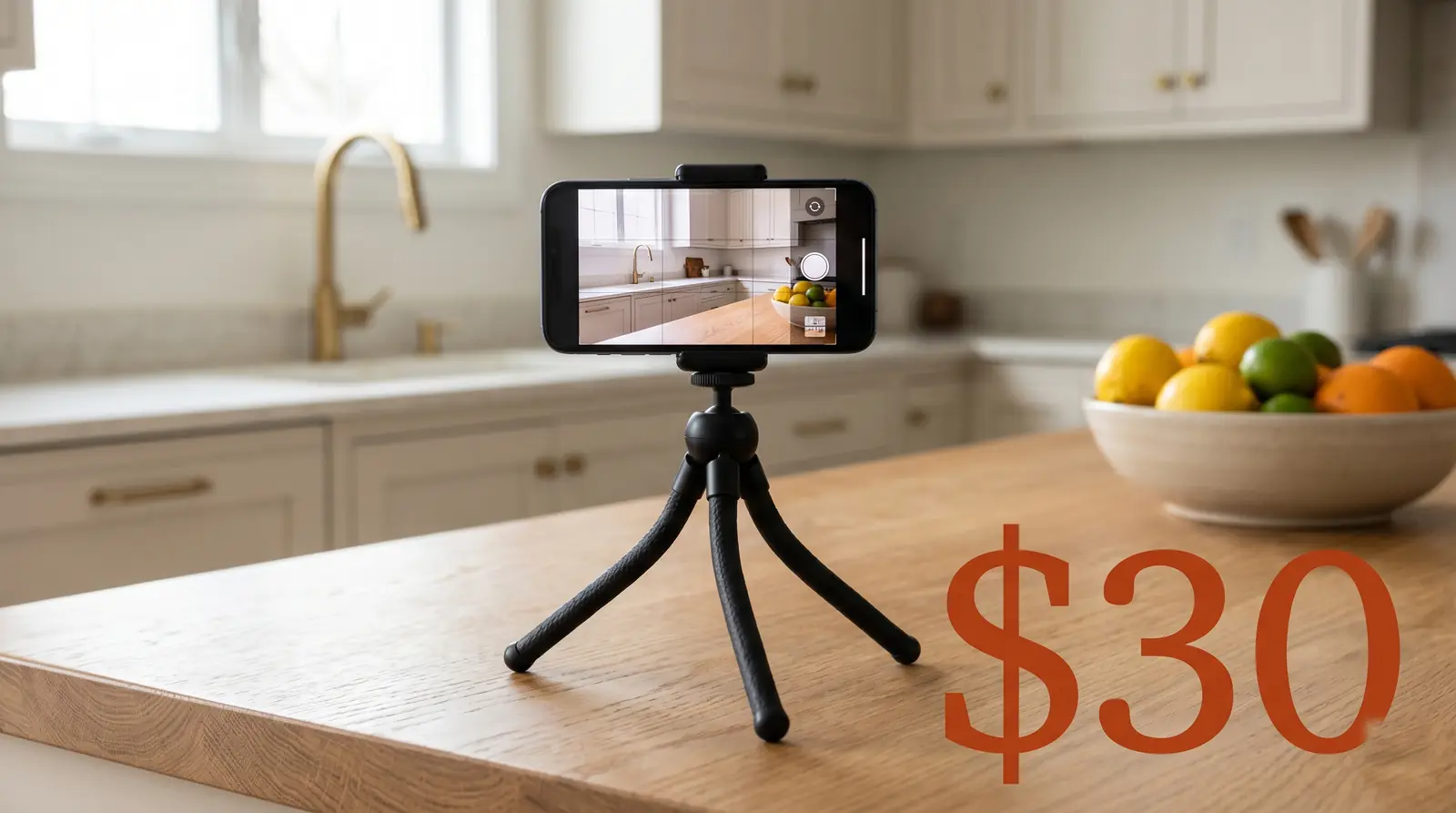
- Use the timer or the volume-down button, then step behind the wall before the shutter trips. The phone on a tripod handles this cleanly — see The $30 mini tripod that pays for itself in one shoot.
3. Fix the mixed-light problem before the shoot
Match the bulbs in the vanity bar. Three warm-white bulbs (2700K) is the safest default. If the room has a window and the daylight is the dominant light source, you can run cool-white bulbs (3000K–3500K) to match — but the mix of warm and cool inside the same room is what kills the photo. Match the temperature, not the colour.
Replace anything burned out. A bathroom with two vanity bulbs lit and one dark reads as “this house is not cared for” before the buyer can articulate why.
4. Camera at chest height — and slightly more often, at hip height
For most rooms, chest height (four to five feet) is correct. Bathrooms are the exception. Vanities and counters sit lower than living-room surfaces, and a chest-height camera makes the counter look like the focal point.
The grid still applies. Keep verticals straight.
What buyers are actually looking for in the bathroom photo
The bathroom photo is not a beauty shot. It is a functionality and quality shot. Buyers want to see:
- The size relationship between the tub or shower, the vanity, and the toilet. They are checking whether they can move comfortably in the room.
- Storage. Vanity drawers, linen closet, recessed shelving in the shower, medicine cabinet.
- The finishes. Tile, counter, fixtures, faucet. Specifically: are the finishes consistent and reasonably current?
- Light. Is there a window? Is the vanity well-lit? Bathrooms with no window are not deal-breakers, but they need to read bright enough to feel cared for.
A bathroom photo that surfaces those four cleanly will outperform a beauty shot every time.
Two specific buyer-preference numbers worth knowing: the NAHB What Home Buyers Really Want survey has reported for years that private water closets, walk-in pantries, and double vanities rank among the most-desired bathroom and adjacent-storage features. A bathroom listing photo that shows even one of these in passing — a dedicated water closet door, a clearly visible second vanity sink, a glimpse of a linen closet — does work the description cannot.
The short version
Bathrooms photograph small because the camera is in the doorway, the mirror is full of photographer, the bulbs do not match, and the tripod is at the wrong height. Fix those four and the room reads its actual size. Hip-height tripod, corner position, matched bulbs, mirror clear of reflections. That is the entire technique.
Sources
- NAHB — What Home Buyers Really Want (most recent edition, biennial)
- NAR — 2024 Profile of Home Buyers and Sellers Highlights
The room is bigger than the photo. Shoot it that way.
Phone photos to market-ready listing images in 10 seconds. Twenty free when you sign up — no credit card.
One photo tip every Sunday.
Real techniques agents are using this week. No spam. Unsubscribe in one click.