Bedrooms that feel like a hotel — the primary bedroom shoot
The bedroom in the listing is not the one the seller sleeps in. It’s the one the buyer wants to wake up in.
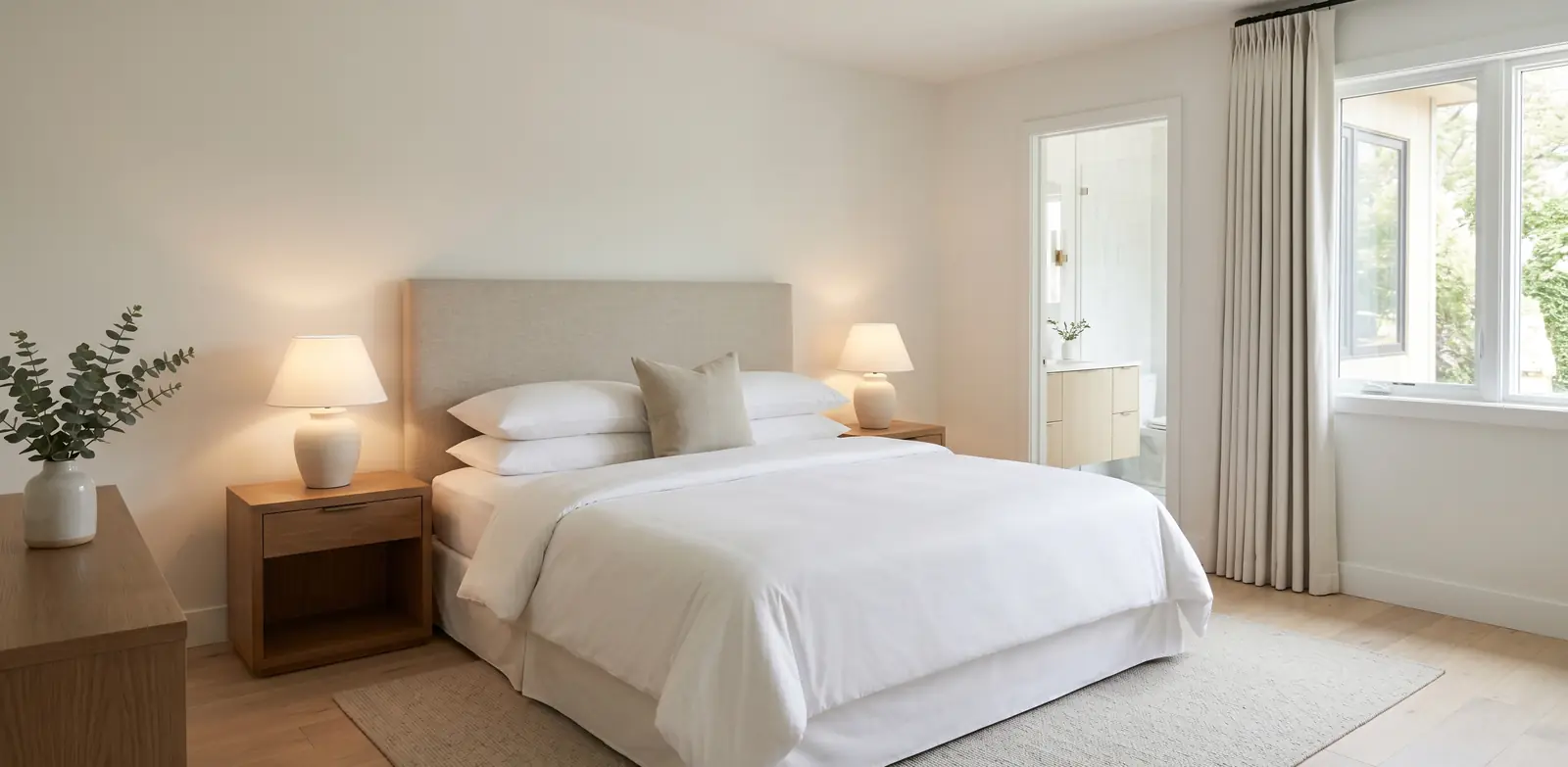
The primary bedroom is the second-most-important photo in a listing after the kitchen — and the easiest one to mishandle. Most agents shoot a bedroom by walking in, pointing the camera at the bed, and tapping the shutter. The result reads as “someone’s bedroom.” What the listing actually needs is “the room you want to wake up in.”
The difference is mostly staging. A small number of technique adjustments closes the rest of the gap.
Why the hotel bedroom works as a reference
A buyer’s mental model of a desirable bedroom is not their own bedroom. It is a hotel bedroom. Buyers’ agents consistently report that the primary bedroom is one of the two most-staged rooms before a sale — alongside the living room — because staging it sells the lifestyle in a way the room’s natural state cannot.
The National Association of Realtors 2025 Home Staging Report found that 83% of buyers’ agents say staging makes it easier for buyers to envision the property as their future home, with the living room (39%) and primary bedroom (36%) the most commonly staged rooms.
Source: NAR — 2025 Home Staging Report
A bedroom dressed like a hotel reads as rested, clean, proportioned, and for the buyer. Those four qualities are what the listing photo is for.
The six staging moves that close 90% of the gap
1. Strip the bed and remake it like a hotel
Crisp white sheets. A single neutral duvet, pulled tight, edges tucked. Two large pillows at the back, two smaller pillows in front, and one decorative cushion. That is the entire pillow count. No piles of throw pillows. No stuffed animals. No personal items.
If the seller does not own white sheets, the agent or a stager should bring a set. The cost is $80 and the impact is the difference between “their bedroom” and “your bedroom.”
2. Remove everything personal
Phone chargers, eyeglasses, books, water bottles, framed family photos, laundry, slippers, the nightstand lamp that does not match the other nightstand. The buyer should see a bedroom they can imagine living in — not someone else’s life paused at 7am.
The two nightstands should match. If they do not match, move one and use a single nightstand on the camera-visible side only.
3. Add one warm light source on a nightstand
A single matched lamp on each nightstand, both turned on, with warm 2700K bulbs. This does two things: it visually anchors the bed in the frame, and it produces the warm-pool-of-light cue that buyers read as “restful.”
4. Lift the window dressing
Pull curtains fully to either side of the window — not partly. Lift Roman shades. Open blinds fully or angle them open. If the window has heavy, dated curtains and the room would look better without them, take them down for the shoot if the seller allows.
The bedroom is a room where natural light does an enormous amount of perceived-quality work. Letting it in is the cheapest upgrade in the house.
5. Clean the floor and the surfaces
Vacuum. Make sure the rug is flat and centred under the bed (or in front of it, if it is a foot-of-bed rug). Wipe the tops of the nightstands and dresser. Remove anything off the dresser that is not intentionally staged — perfume bottles, jewellery boxes, cables, change.
A clean floor and clean surface tops do more for the bedroom photo than any prop you can add.
6. One — and only one — intentional styling element
After the room is dressed and clean, add one styling element to break the sterility:
- A small vase with neutral greenery on the dresser.
- A folded blanket at the foot of the bed.
- A clean tray with two coffee mugs and a folded napkin on the bench at the foot of the bed.
- A stack of two books on the nightstand under the lamp.
One. Not three. The hotel reference works because hotels are restrained, not styled.
The technique
Three rules that travel from the rest of the photography guide:
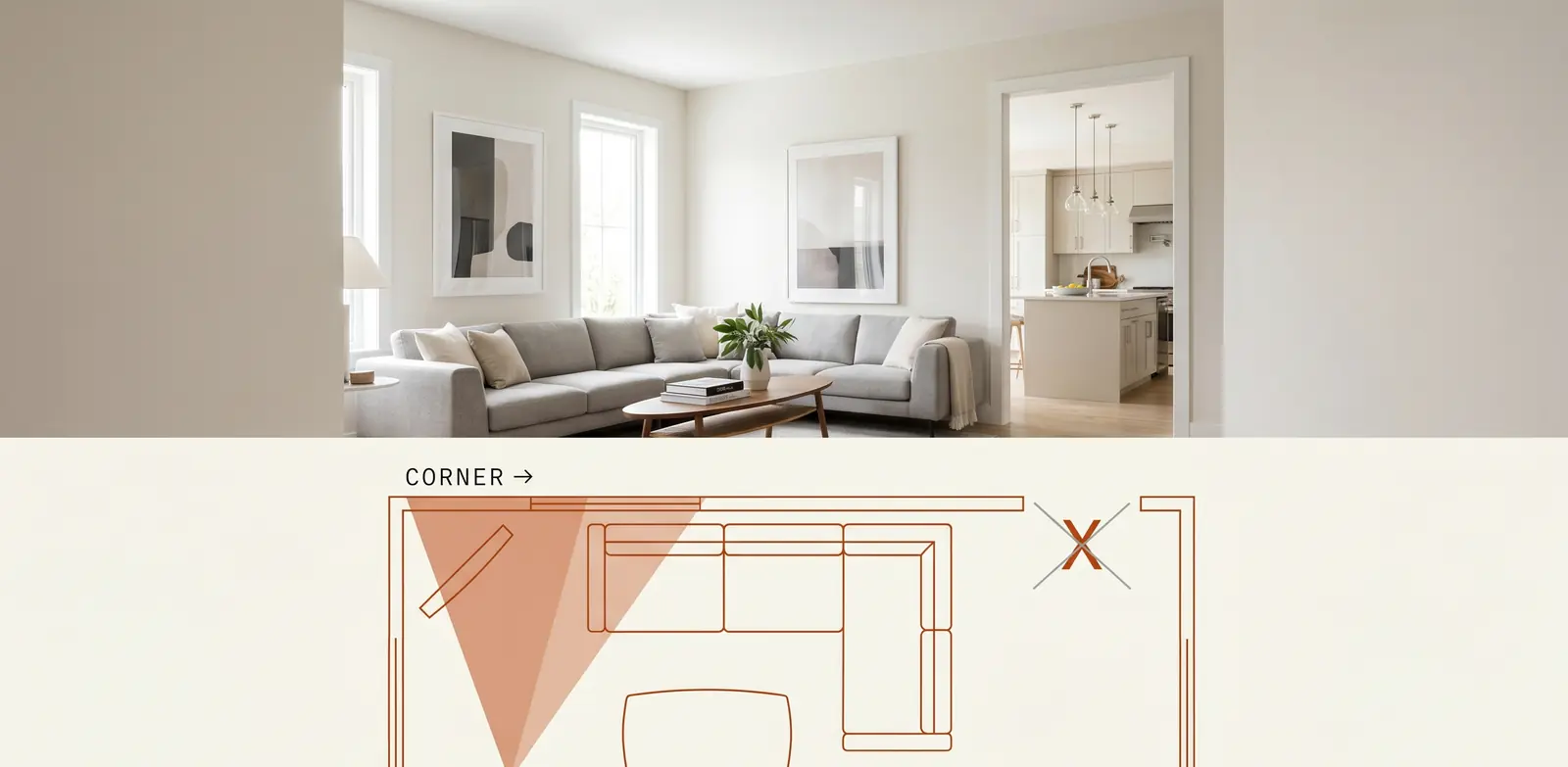
1. Shoot from the corner with the longest diagonal. Almost always the corner opposite the bed, ideally one that includes a doorway or window in the frame. See Corners beat doorways.
2. Camera at chest height, four to five feet off the floor. Lower and the bed looks like a stage. Higher and the room compresses.
3. Exposure-lock on a neutral wall. Tap-and-hold to lock, then nudge exposure up half a stop so the bed reads bright and clean.
If the primary bedroom has access to a balcony, an ensuite, or a walk-in closet, frame the shot so the open doorway is visible. That single doorway in the frame is the cue buyers read as “primary suite,” not “primary bedroom.”
The two-shot rule
The carousel needs at least two photos of the primary bedroom:
- The hero: the corner shot showing the bed, the layout, and one feature (ensuite door, window, fireplace).
- The supporting shot: either the ensuite from the bedroom side, the walk-in closet from the bedroom side, or a feature wall the hero shot did not capture.
Two photos of the primary bedroom, both staged like a hotel, beat one photo of a primary bedroom dressed for the family who lives there.
The short version
Strip the bed and remake it crisp. Remove the personal. Two lamps on, warm. Curtains fully open. One styling element, not three. Shoot from the corner at chest height. The bedroom in the listing is not the bedroom the seller sleeps in — it is the bedroom the buyer wants to wake up in.
Sources
Dress it like a hotel. Sell the room they want.
Phone photos to market-ready listing images in 10 seconds. Twenty free when you sign up — no credit card.
One photo tip every Sunday.
Real techniques agents are using this week. No spam. Unsubscribe in one click.